Water or sewage comes up a basement floor drain because it's the lowest opening in your plumbing. When water can't leave the house, it shows up there first.1 There are three usual causes: a clog in the floor drain itself, a blocked main sewer line, or a city sewer that's overloaded after heavy rain.1 Stop using water, work out which one you have, then fix that cause. A plunger or hand snake only fixes the first one.
TL;DR
- If only the floor drain is slow, the clog is probably in that drain or its trap, and you may clear it yourself.
- If toilets gurgle or tubs back up too, or it gets worse when you run water upstairs, suspect the main sewer line and get it cleared and camera-checked by a pro.
- If it only happens in storms, the city sewer or groundwater is the likely cause. A backwater valve, a sump pump and better outside drainage prevent the next one. A drain cleaner won't.
- Treat any backup that smells like sewage as contaminated. Wear rubber boots and gloves if you have to go near it, and bring in a pro for the cleanup.
- Fix the cause before you finish the basement. Drywall, carpet and framing near a drain that backs up won't survive it.
Why is water coming up through the floor drain in my basement?
Water comes up the floor drain because something downstream won't let it leave. The floor drain sits at the lowest point of the home's drainage system, so a clog or blockage anywhere along the main sewer line forces water and waste back up through it.1 The drain is where you notice the problem, and often not where the problem is.
A basement floor drain is there to carry away water from flooding, leaks and plumbing mishaps.1 It sends that water into a pipe that leads out of the basement and away from the house.2
Most floor drains have a trap. That's a U-shaped bend that holds a little water to block sewer gas and odors, and it also catches debris.2 When the trap, the drain line or the main line is blocked, the water has only one way to go.
So the useful question is where the blockage sits. The answer decides whether this is a job for a plunger, a sewer camera or a valve.
Which cause do you have?
You can usually narrow it to one cause with three questions. Is the floor drain the only one affected? Does it get worse when water runs elsewhere in the house? Does it happen after heavy rain or snow?2 Your answers point to a clog, the main line, the city sewer or groundwater.
| What you see | Likely cause | First fix | Who usually fixes it |
|---|---|---|---|
| Only the floor drain is slow or backs up. No sewage smell. | Clog in the floor drain or its trap3 | Clean the trap, plunge, then snake the drain1 | You, if you're comfortable with drain tools |
| Several drains are slow, toilets gurgle, tubs back up. Worse when you run water upstairs. | Blocked or damaged main sewer line3 | Camera inspection, then cleaning or jetting1 | A plumber or sewer specialist |
| Backup starts after heavy rain, even with normal water use | Overloaded city sewer or saturated ground1 | Backwater valve for sewer backflow. Sump pump and outside drainage for groundwater.1 | A plumber, and a waterproofing contractor for groundwater |
| Backs up again and again, even after cleaning | Old, damaged or badly installed pipe1 | Camera inspection and repair or reinstall2 | A plumber |
A clog in the floor drain or its trap
This is the only cause you can usually clear yourself with a plunger or hand snake. A clog farther down the main line needs professional equipment.1 Dirt, hair and soap residue collect in the trap.2 If only the basement drain is affected, the problem may be limited to that drain or the branch line near it.3
A blocked or damaged main sewer line
The main line connects every drain in the house to the city sewer or a septic tank. Hair, wipes, paper towels, laundry lint and tree roots can all block it.2 Tree roots grow toward water and can get into older sewer pipes. That causes blockages that keep coming back.1 Homes built before the 1970s often have clay or cast iron pipes that can crack, collapse or corrode.1
A strong clue is timing. If the floor drain backs up right after you fill a tub or run the washer, a main line blockage is more likely than a clog in that one drain.1
A city sewer surcharge after heavy rain
Sometimes the problem starts outside your property. When the city's sewer system gets overwhelmed, it can push wastewater back through your home's drain.1 Your own pipes can be clean and this still happens. That's why cleaning the line doesn't stop storm backups.
Groundwater and a failed sump pump
Heavy rain can saturate the soil, so water seeps into the basement and overwhelms the floor drain.2 If you have a sump pump and it fails, water can back up fast. That's most likely during heavy rain, when the system is under the most stress.1
A drain that was installed wrong
A drain installed uphill, or with a line that's too small for the flow, can back up with no clog at all.1 The fix is to have it reinstalled by a plumber.2
What can I do if my basement floor drain is backing up?
Stop using water everywhere in the house right away. That means no flushing, no sinks, no showers and no washer or dishwasher.3 Every gallon you send down a drain ends up on the basement floor. Then keep people and pets away, check the other fixtures and work out the cause before you try any fix.
Protect yourself first
Put on rubber boots and gloves before you go near the water. Keep people and pets out of the basement. Shut off power to the basement if water is near outlets or appliances.1 If you're not sure how to do that safely, leave it for an electrician.
Check the other fixtures
Look for slow or gurgling drains and water backing up in tubs and showers.3 Note whether the water smells like sewage and whether it's still rising. If it is still rising, stop all water use and call a professional.1
Try a minor clog only if the signs fit
If there's a small amount of water, no sewage smell and only the floor drain is affected, you can try to clear it.1
- Lift off or unscrew the drain cover and remove any debris you can see.1
- Find the trap's cleanout plug, unscrew it and clear out the buildup.1
- Plunge with a tight seal to dislodge the clog.1
- Work a drain snake or hand auger slowly through the line. Forcing it can damage older pipes.1
- Pour a bucket of water down slowly. If it backs up again, stop and call a pro.1
Skip chemical drain cleaners on a backed-up drain. With nowhere to go, they can sit in the pipes or splash back on you.1 They also rarely solve deeper blockages.3
Know when to stop
Call a plumber if sewage is present, water keeps backing up, more than one drain is affected, the basement smells like sewer gas, it happens after every heavy rain or the home has older sewer lines.3 A plumber can run a camera through the pipe to find the blockage, then snake or jet the line.1
Can a backed up sewer in your basement make you sick?
Yes, it can. Sewer backup water isn't clean. It can carry raw sewage, bacteria and other harmful contaminants.1 Avoid direct contact, wear boots and gloves, and keep children and pets out.3 The EPA advises calling in a professional with experience cleaning buildings damaged by contaminated water when sewage is involved.4
The second risk is mold. The EPA says to dry water-damaged areas and items within 24 to 48 hours to prevent mold growth.4 Mold produces allergens and irritants. It can trigger allergic reactions and asthma attacks in people with asthma who are allergic to mold.4 If you have health concerns, the EPA says to talk to a health professional before you start cleanup.4
For cleanup:
- Pull up standing water with a wet/dry shop vacuum before you mop.1
- Throw away porous items that touched the water, like cardboard, rugs and fabric. They can't be fully disinfected.1
- Carpet and ceiling tiles that get moldy may have to be thrown away too.4
- Never mix chlorine bleach with cleaners that contain ammonia. It makes toxic fumes.4
- Run fans or a dehumidifier until everything is fully dry.1
If mold covers more than about 10 square feet, or there's been a lot of water damage, the EPA points you to its detailed guide, Mold Remediation in Schools and Commercial Buildings, which it says applies to other building types too.4
How do you stop sewage backing up through a floor drain for good?
Match the fix to the cause. A clog needs the drain or main line cleared, then camera-checked. A city sewer surcharge needs a backwater valve. Rain-driven groundwater needs a working sump pump and better drainage outside. A standpipe or floating drain plug only buys time. None of these fixes help if they target the wrong cause.
Clear the line and look inside it
If the main line was the problem, have it cleaned and camera-inspected so you know whether roots, grease or broken pipe caused it.1 Then keep it on a schedule. Sources differ on timing. One drain company suggests an inspection and cleaning every couple of years, especially in older homes or near large trees.1 A plumbing company suggests every year, or whenever you notice warning signs.2 If you've had root problems, the shorter interval makes more sense.
Know where your sewer cleanout is. It's usually a white or black-capped pipe in the yard or basement, and it lets a technician reach the line quickly.1
Install a backwater valve for city sewer backups
If city sewer backups are common where you live, a backwater valve can stop city sewage from flowing back into your home through the basement floor drain.1 It's a one-way valve fitted on the sewer line. Wastewater flows out normally. When flow reverses, the valve closes.
Two things to know. While the valve is closed, your own wastewater can't leave either, so stop using water during a surcharge. And the valve needs to be checked and kept clear of debris, or it may not seal when you need it. A plumber fits it, since it means cutting into the sewer line. Local rules on backwater valves vary, so your plumber should check with the building department and pull any permit it needs. Get the cost in a written quote.
Use a standpipe or floating plug as a stopgap
A standpipe is a short length of pipe fitted into the floor drain opening. Water has to rise above the top of the pipe before it spills onto the floor. A floating drain plug has a ball that lifts and seals when water rises from below, and it drops to let floor water drain.
Both can hold back a small, brief backup. Neither is built to hold back a sewer under sustained pressure. When the drain is blocked, the water looks for the next lowest opening, such as a basement toilet or shower. Treat these as a stopgap while you fix the real cause. Ask your plumber whether either suits your drain.
Deal with rain-driven water at the source
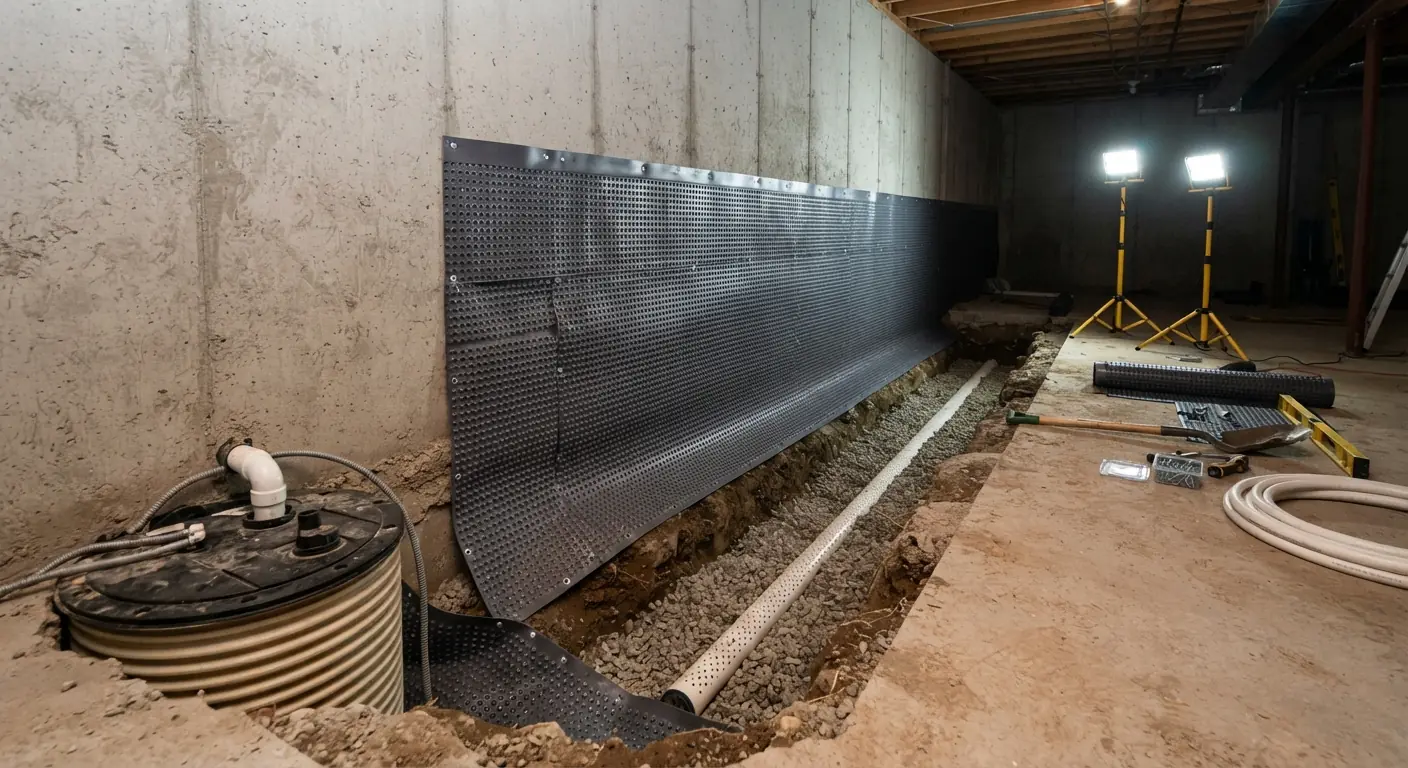
Water that comes in from saturated ground is a waterproofing problem, and the floor drain is just where it shows. A sump pump sits in a basin in the basement floor and pumps water away from the house.5 HomeGuide puts sump pump installation at $600 to $2,500 on average, and replacing an existing pump at $400 to $700.6 Our guide to adding a sump pump walks through the install. A battery backup keeps the pump running when the power goes out, which often happens in the same storms that flood basements.6
Outside, keep gutters and downspouts clear, extend downspouts away from the foundation and make sure the soil slopes away from the house.7 If that isn't enough, our guide to interior and exterior basement waterproofing methods compares the bigger fixes. HomeGuide puts interior waterproofing at $6,000 to $12,000 on average and exterior waterproofing at $10,000 to $18,000.5
| Fix | Which cause it addresses | Typical cost |
|---|---|---|
| Clean trap, plunge, snake | Clog in the floor drain | Your time and a basic drain tool |
| Main line cleaning and camera | Clog, roots or damage in the main line | Get a written quote |
| Backwater valve | City sewer surcharge | Get a written quote |
| Standpipe or floating plug | Small, brief backups only (stopgap) | Ask your plumber |
| Sump pump, installed | Groundwater after heavy rain | $600 to $2,500 average, HomeGuide6 |
| Interior waterproofing | Groundwater entering the basement | $6,000 to $12,000 average, HomeGuide5 |
Can I plug my basement floor drain?
You can cap it for a short time, but a solid plug has costs. The drain exists to clear water from floods and leaks.2 Plug it and that water has nowhere to go. And if the sewer backs up, a plug doesn't stop the pressure. Sewage looks for the next lowest opening.
That's why a solid plug makes a poor permanent fix. The drain is also your early warning. It's often the first place a sewer problem shows.3 Seal it and the next backup may come out of a basement toilet or shower instead.
If you want protection at the drain itself, a floating plug or standpipe is the gentler option. For real protection from the city sewer, a backwater valve on the line is the fix that matches the cause.1 Ask your plumber before you seal any drain for good. Our guide to basement floor drains covers drain types and how to finish around one.
What should you settle before finishing a basement with a floor drain?
Settle why the drain backed up and fix it before any framing goes in. Building Science Corporation advises choosing floor finishes and lower-wall finishes with flooding from leaky appliances, failed plumbing or overflowing sinks in mind.8 A drain that backs up once will likely do it again unless the cause is fixed.
Wet drywall, carpet and insulation can grow mold. The EPA notes that porous materials like carpet may have to be thrown away if they get moldy.4 So the order matters. Find the cause, fix it and confirm it works through a wet season, then finish.
When you ask for a quote on finishing a bare basement or remodeling a finished one, tell the contractor about any backup history. At the free on-site estimate, the contractor measures, checks moisture and ceiling height and talks through the layout. That's the right time to raise the floor drain, the sump and any backwater valve. If you're in Colorado, see how basement finishing works in Denver. In Georgia, see basement finishing in Atlanta.
If water is getting in from outside, fix it before the build. You can get a written quote for basement waterproofing from one vetted, licensed basement contractor. You'll get a free on-site estimate and a written, itemized quote, and nothing starts until you sign.
What to ask your contractor or plumber
A good quote names the cause it's fixing. Ask these questions before you agree to any work. HomeGuide lists "How is water getting into my basement?" and "Which waterproofing methods do you recommend for my basement and why?" as questions to ask a waterproofing contractor.5
- Did you run a camera through the line? What did it show, and where?
- Is this a clog, a damaged pipe, a city sewer surcharge or groundwater?
- Would a backwater valve help my house? Does it need a permit here, and will you pull it?
- If you recommend a sump pump, does it include a battery backup?6
- Does the estimate cover materials, labor and cleanup?5
- What warranty comes with the work, in writing?5
If you're planning a finish, you can find a vetted basement contractor by ZIP code and raise all of this at the estimate.