We serve metro Atlanta and 13 surrounding cities through one vetted basement contractor. Pick your city for local pricing, permit offices and a free on-site estimate.
Cobb, Fulton, Gwinnett, DeKalb, Cherokee and Forsyth
Why do so many Atlanta homes have walkout basements?
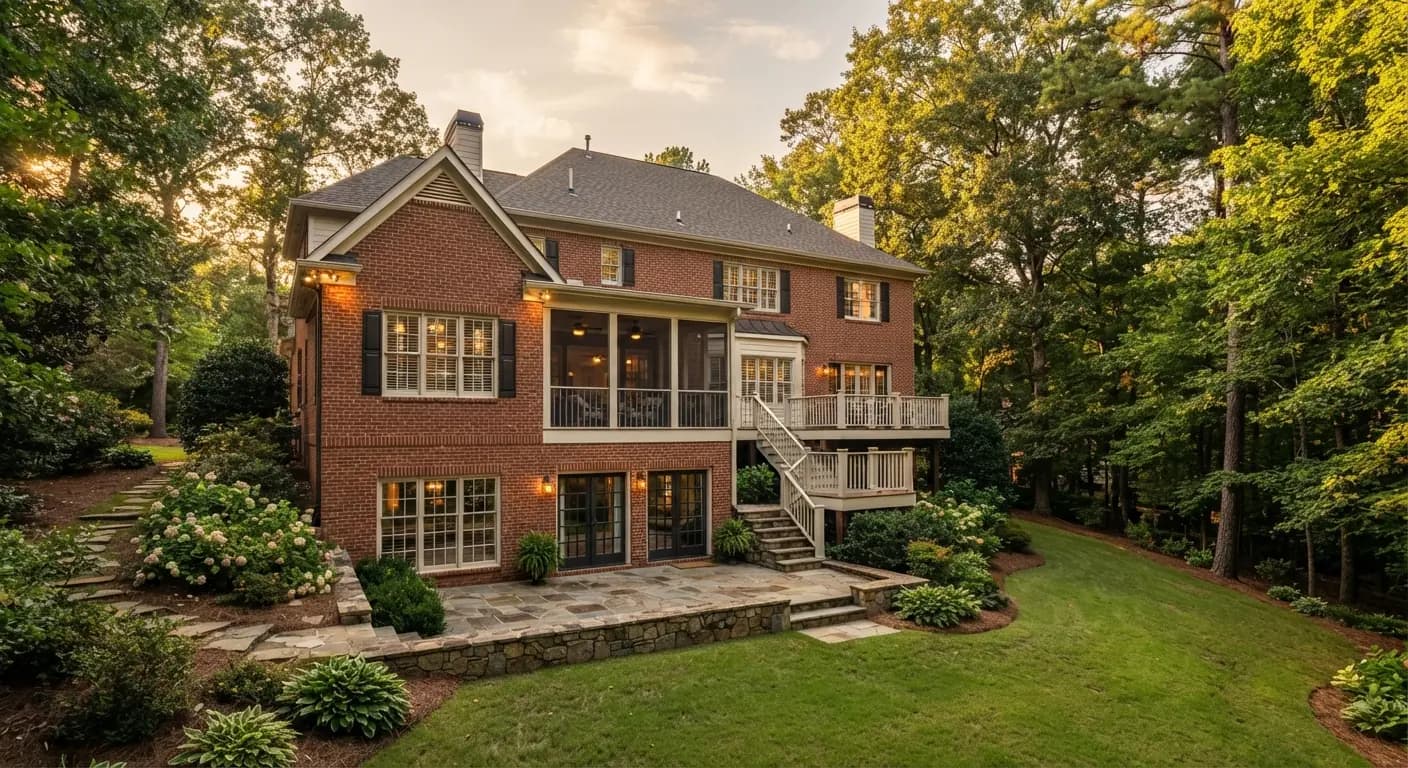
Much of north metro Atlanta is hilly, so builders set homes into the slope. The low side of the basement often sits at ground level with doors and full windows.
Who issues basement permits in Georgia?
Permits are local. The City of Atlanta, each county and incorporated cities like Marietta, Roswell and Alpharetta run their own building departments.
Georgia basement rules
What Georgia homeowners should check before a basement remodel
What building code applies to a basement remodel in Georgia?
Georgia homes follow the 2024 International Residential Code with Georgia amendments. The Georgia Department of Community Affairs lists it as the mandatory state minimum code for one- and two-family homes.
Plumbing work follows the 2024 International Plumbing Code with Georgia amendments. Wiring follows the 2023 National Electrical Code with Georgia amendments. Your city or county building department enforces all three at each inspection.
How high does a basement ceiling need to be in Georgia?
Living space created in an existing basement needs a ceiling of at least 6 feet 8 inches under the 2024 code. Bathrooms and laundry rooms can drop to 6 feet 4 inches.
Beams, ducts and pipes may hang down to 6 feet 4 inches above the finished floor. Measure from the slab to the lowest joist before you plan rooms, because flooring and a ceiling eat into that height.
Which Georgia counties have high radon levels?
Fulton, Cobb, DeKalb and Gwinnett are the four Georgia counties the EPA lists as Zone 1. That means homes there have a predicted average indoor radon level above the EPA action level of 4 picocuries per liter.
Radon gas enters through the slab and foundation walls, so the basement reads highest. Test before you build walls. The University of Georgia runs the Georgia Radon Program and sells test kits.
Do permit rules differ between Georgia counties?
Yes, each county and city sets its own paperwork. Gwinnett County's published guide asks for a floor plan drawn to scale with every room labeled for its use. Homes on a private septic system also need Environmental Health approval before Gwinnett issues the permit.
The City of Atlanta takes permit applications online through its Accela Citizen Access portal. Your contractor files in the right place for your address.
Why do Georgia basements need extra moisture control?
Humid Georgia summers push damp air against cool foundation walls, where it condenses. A finish that traps that water behind drywall grows mold.
One Atlanta design-build firm fits rigid foam against the foundation and frames the walls in front of it. It also treats a reading that stays above 60 percent relative humidity as a problem to fix before construction.
Basements in Georgia stay cool on their own. The heating and cooling work in a finish is mostly about drying and moving the air.
What are common basement remodel mistakes?
Most costly mistakes happen before the first wall goes up. These five come up again and again.
Framing before you test for moisture and radon
Planning a bedroom with no egress window or door
Losing ceiling height to a drop ceiling you did not measure for
Skipping the permit and paying for it when you sell
Straight answers. Ask your contractor anything else at the free estimate.
What is the average cost to finish a basement in Georgia?
In metro Atlanta, one design-build firm publishes $45,000 to $80,000 for a typical full finish. Your written quote sets the exact price for your basement.
Do I need a permit to finish my basement in Georgia?
Yes. Finishing a basement adds living space, so Georgia cities and counties require a building permit and inspections for it.
What type of flooring is best for basements?
Luxury vinyl plank with a waterproof core suits most Georgia basements because it copes with damp concrete. Tile and epoxy coatings also work well below grade.
Do I need an egress window in a Georgia basement?
You need one in every new basement bedroom. It must open to at least 5.7 square feet with a sill no higher than 44 inches from the floor.
Start your Georgia basement
Get a free on-site estimate from one vetted local basement contractor.