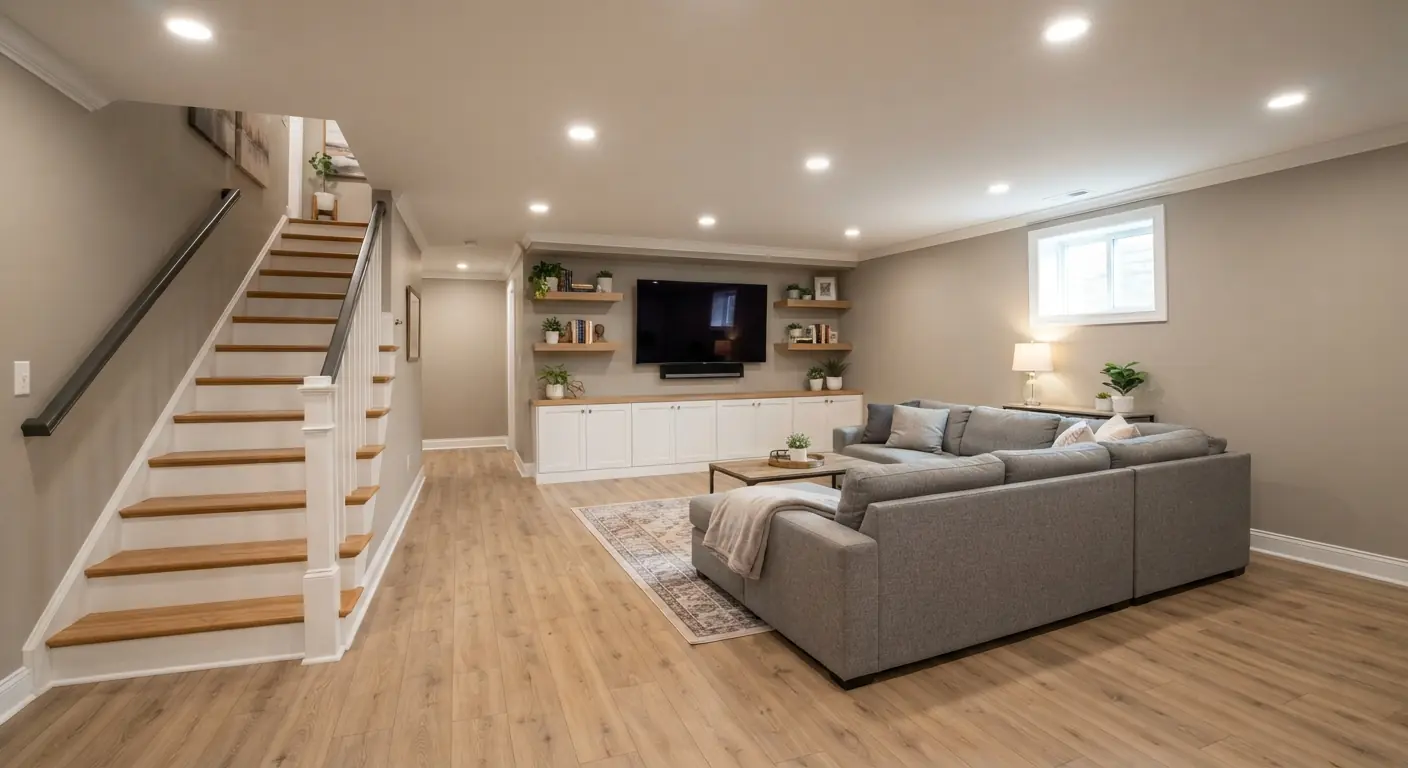
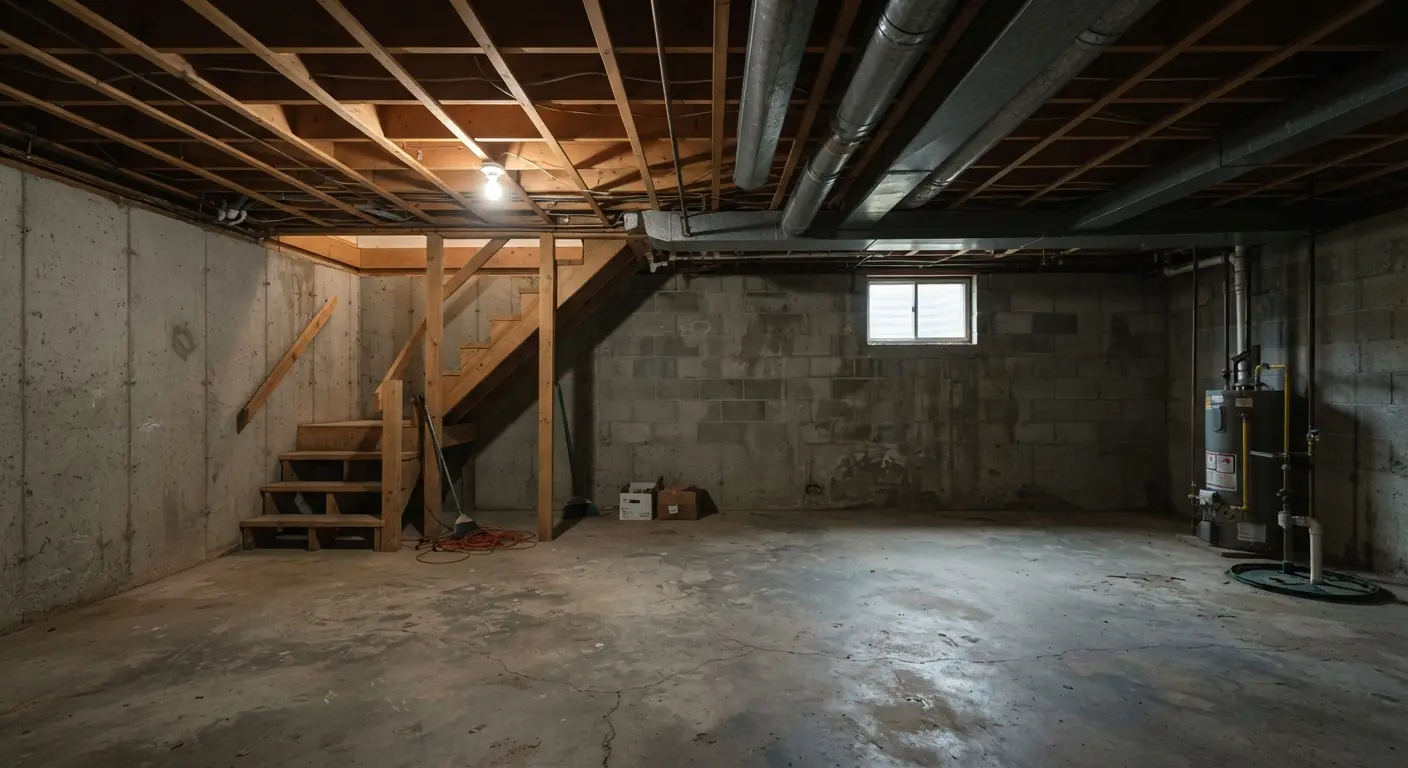
Basement finishing turns an unfinished basement into living space. The job covers framing, insulation, wiring, drywall, ceilings and floors. We match you with one vetted, licensed contractor in your city. They give a free on-site estimate and a written itemised quote, then pull the permits.
An unfinished basement already has a floor, walls and a roof over it. Finishing adds rooms inside the footprint you own. You skip the foundation and roofing work an addition needs. Most finishes start with a family room. Many add a bedroom, a bathroom or an office too. The work runs in a set order. Water problems get fixed before anything goes on the walls. Framing, rough wiring and plumbing come next and get inspected. Insulation, drywall, ceilings and floors close it up. Your contractor runs each trade and books each inspection. You get one written quote that lists every line. You deal with one contractor from the first visit to the final sign-off.
KEY POINT
Fix any water problem before the first stud goes up.
BeforeAfter
What is included
The trades in a basement finish
Each finish is scoped to your space. Most include these parts.
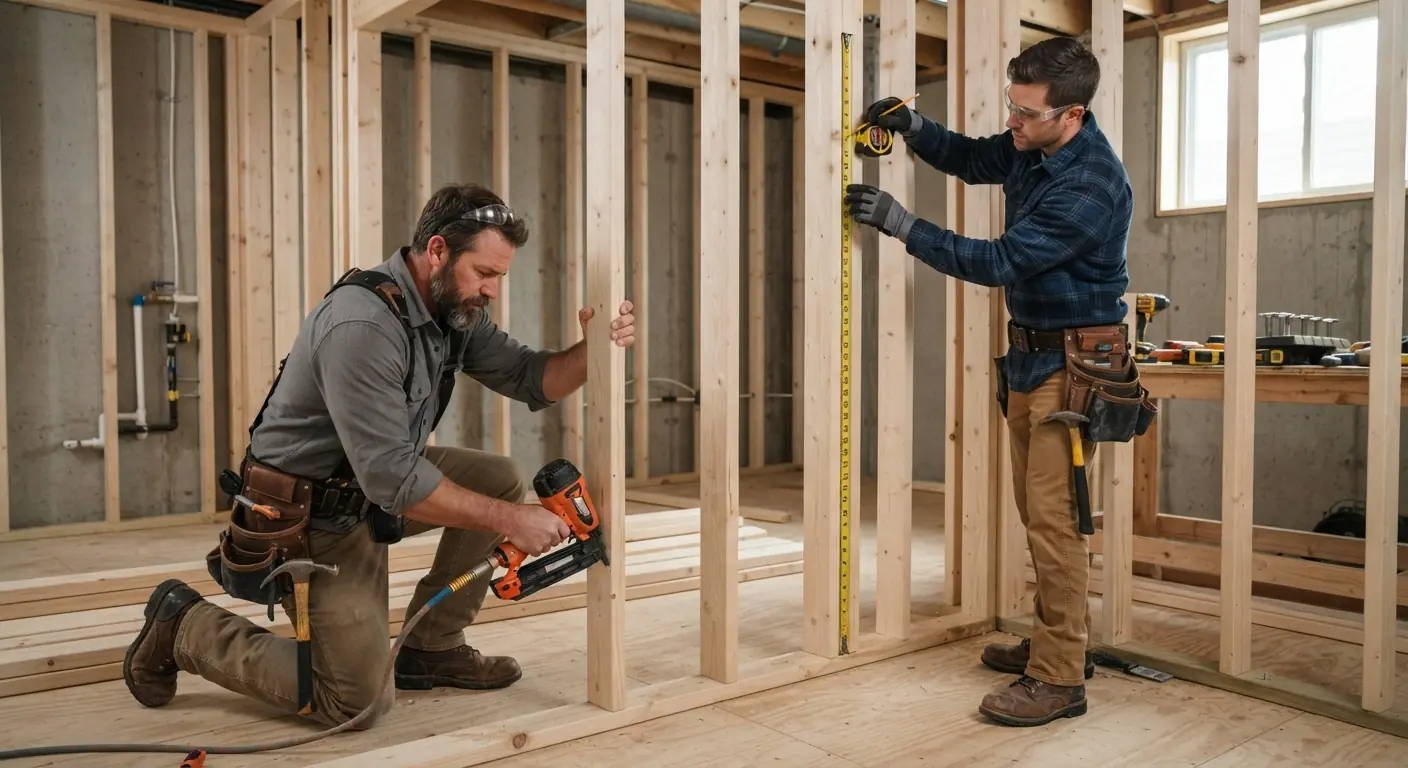
Framing
Stud walls set off the foundation to create rooms, closets and soffits.
Insulation
Wall and rim joist insulation keeps the space warm and helps control condensation.
Electrical
New circuits, outlets, switches and lights wired to code and inspected before drywall.
Drywall
Hung, taped and finished walls ready for paint. Moisture-resistant board goes in wet areas.
Ceilings
Drywall for a clean look or a drop ceiling for access to pipes and valves.
Flooring
Below-grade floors such as luxury vinyl plank, tile or carpet over a subfloor.
Finishing guide
What to know before you finish a basement
What is the average cost to finish a basement?
HomeGuide puts the national average at $30 to $50 per square foot. For a 500 to 1,500 square foot basement that comes to $15,000 to $75,000.
Walls and rooms raise the price. HomeGuide prices a 1,000 square foot open plan at $30,000 to $40,000. The same space split into three rooms runs $40,000 to $50,000.
Local prices can sit above the national figures. In metro Atlanta, a typical full finish runs $45,000 to $80,000 according to one local design-build firm.
What is the proper way to finish a basement?
The proper way to finish a basement is to settle water, air quality and code limits before you design a single room. Skipping these checks is what forces new walls to come back down.
Watch the basement through a season of heavy rain and fix gutters, grading or leaks.
Run a radon test. The EPA says to fix a home that tests at 4 pCi/L or higher.
Measure ceiling height under ducts and beams before you draw rooms.
Place any bedroom on an outside wall where an egress window can go.
Use a treated bottom plate where wood framing meets concrete.
Keep access panels at shutoff valves, cleanouts and the sump.
What ceiling height does a finished basement need?
Under the International Residential Code, basement living space needs a ceiling height of at least 7 feet. Beams, ducts and pipes may drop to 6 feet 4 inches above the finished floor. Bathrooms and laundry rooms need 6 feet 8 inches.
Each city adopts its own edition of the code. Your contractor confirms the local number during the estimate.
A low basement can often still pass. Ducts can move into soffits along the walls to clear the middle of the room.
Can a finished basement have a legal bedroom?
A basement bedroom is legal when it has an emergency escape opening and the other sleeping room safety items. The code sets the minimum size of that opening.
HomeGuide puts an installed egress window at $2,000 to $5,000. Smoke alarms go inside each sleeping room. Carbon monoxide alarms go outside the sleeping area.
Net clear opening of at least 5.7 square feet
Opening at least 24 inches high and 20 inches wide
Bottom of the opening no more than 44 inches above the floor
A ladder or steps in any window well deeper than 44 inches
What are the common problems with finished basements?
The most common problems with finished basements trace back to moisture. Damp air feeds mold behind drywall and under carpet long before anyone sees it.
The EPA advises keeping indoor humidity below 60 percent. A dehumidifier with a drain line to the sump or a floor drain keeps the level in check without emptying buckets.
Carpet pad laid straight on a slab that wicks moisture
Paper-faced drywall touching the concrete floor
Boxed-in valves that a plumber cannot reach
Rooms with no heat or return air that stay cold
One overhead light per room and too few outlets
When should you not finish a basement?
You should not finish a basement while water still gets in or the structure is moving. Wait and fix the cause first if any of these apply.
Water comes through the walls or floor after heavy rain
A radon test reads at or above 4 pCi/L and no mitigation is planned
Foundation cracks keep widening or a wall bows inward
The ceiling sits below code height and lowering the floor is out of budget
Does a finished basement increase property tax?
A finished basement can increase your property tax because the assessor may add the new living space to the home's value. The change can show up at the next assessment after the permit closes.
How much it rises depends on your county's rules and tax rate. Call the county assessor's office and ask how they treat finished basements.
Skipping the permit to dodge the tax is a poor trade. Unpermitted rooms can cause trouble with insurance claims and slow down a sale.
One metro Atlanta design-build firm publishes $45,000 to $80,000 for a typical full finish, and the Atlanta cost guide shows what moves that number. Range: typical full finish in metro Atlanta, one local firm's published range, checked September 2026.
Straight answers. Ask your contractor anything else at the free estimate.
Is finishing a basement worth the money?
Finishing a basement is usually worth it when the space is dry and your family will use it. HomeGuide estimates a 70% to 75% return on the cost at resale. The rest of the value comes from the rooms you use while you live there.
How long does it take to finish a basement?
HomeGuide puts a basement finish at 4 to 16 weeks. The number of rooms, plumbing work and inspection wait times decide where your job lands.
How much is a permit to finish a basement?
HomeGuide puts a basement finishing permit at $200 to $1,000. Some cities charge 1% to 2% of the project cost as the fee. Your contractor pulls the permit and adds the fee to the quote.
Can you finish a basement for under $10,000?
You can finish part of a small basement for under $10,000 in some markets. HomeGuide lists partial finishes at $2,500 to $20,000 and a DIY full finish at $10,000 to $30,000. Wiring and plumbing still need permits.
How do people pay for a basement finish?
Common options include a home equity line of credit, a personal loan, an FHA 203(k) loan, contractor financing or cash. Get the written quote first so you borrow the right amount.
What should I look for in a basement finishing contractor?
Look for a current license where your state requires one, proof of insurance and a quote broken out by trade. Ask how they will handle moisture and who books each inspection. We match you with one vetted, licensed contractor in your city for a free on-site estimate.
Ready to start your basement finishing?
Get a free on-site estimate from one vetted local basement contractor.