Basement finishing turns a bare Atlanta basement into heated, lit, permitted living space. Basement Remodeling Co. matches you with one vetted local contractor. A typical full finish in metro Atlanta runs $45,000 to $80,000, with a free on-site estimate first.
Updated September 2026Atlanta and 13 nearby cities
Free on-site estimate
Written, itemised quote
Permits and inspections handled
One contractor per city
What a full finish looks like
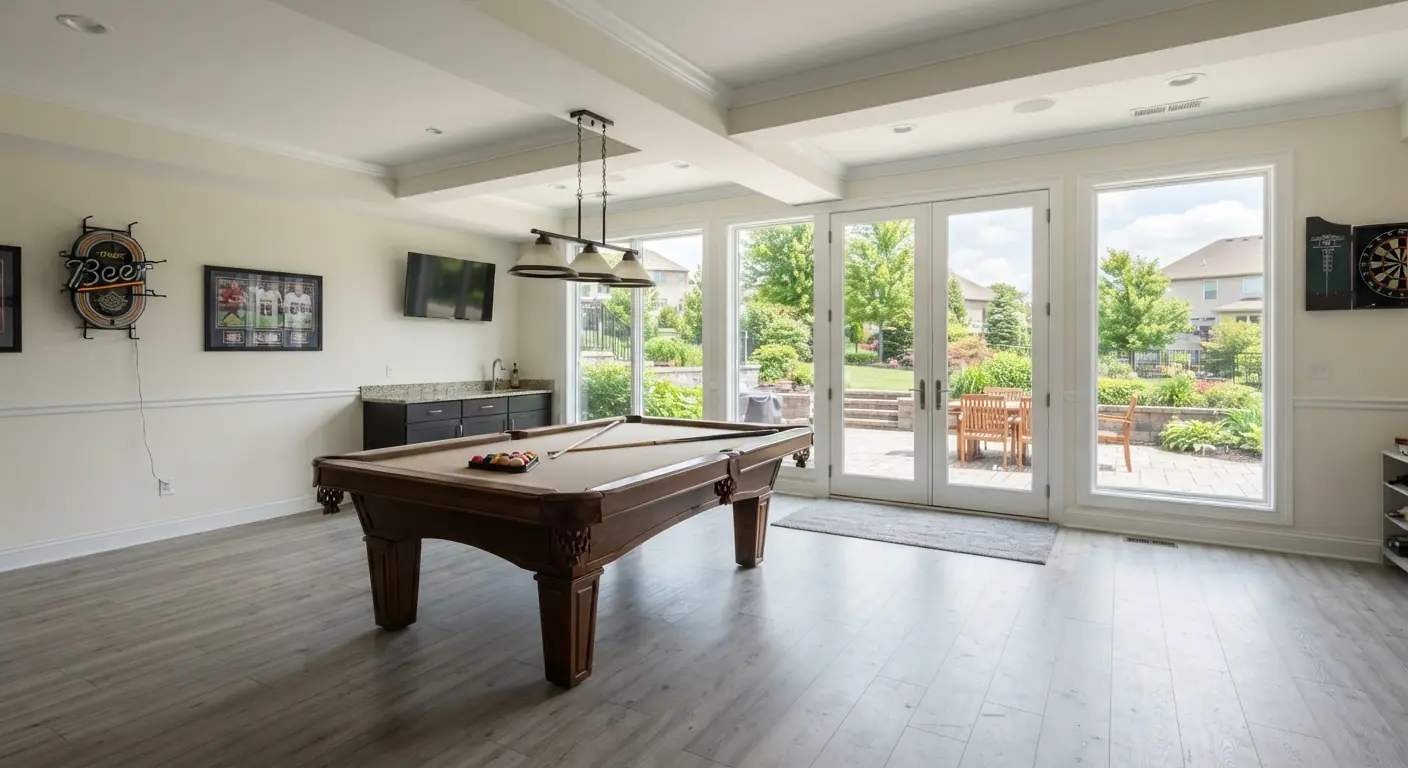
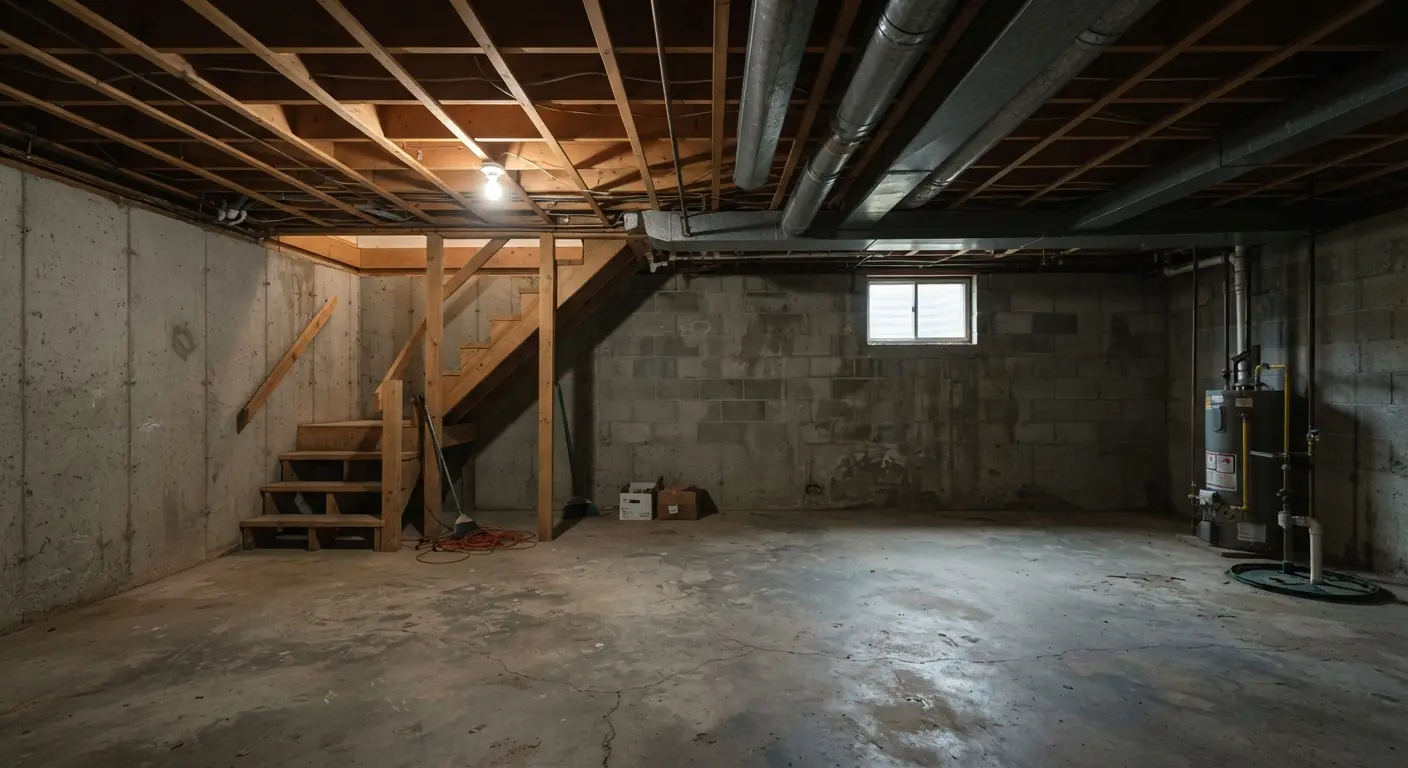
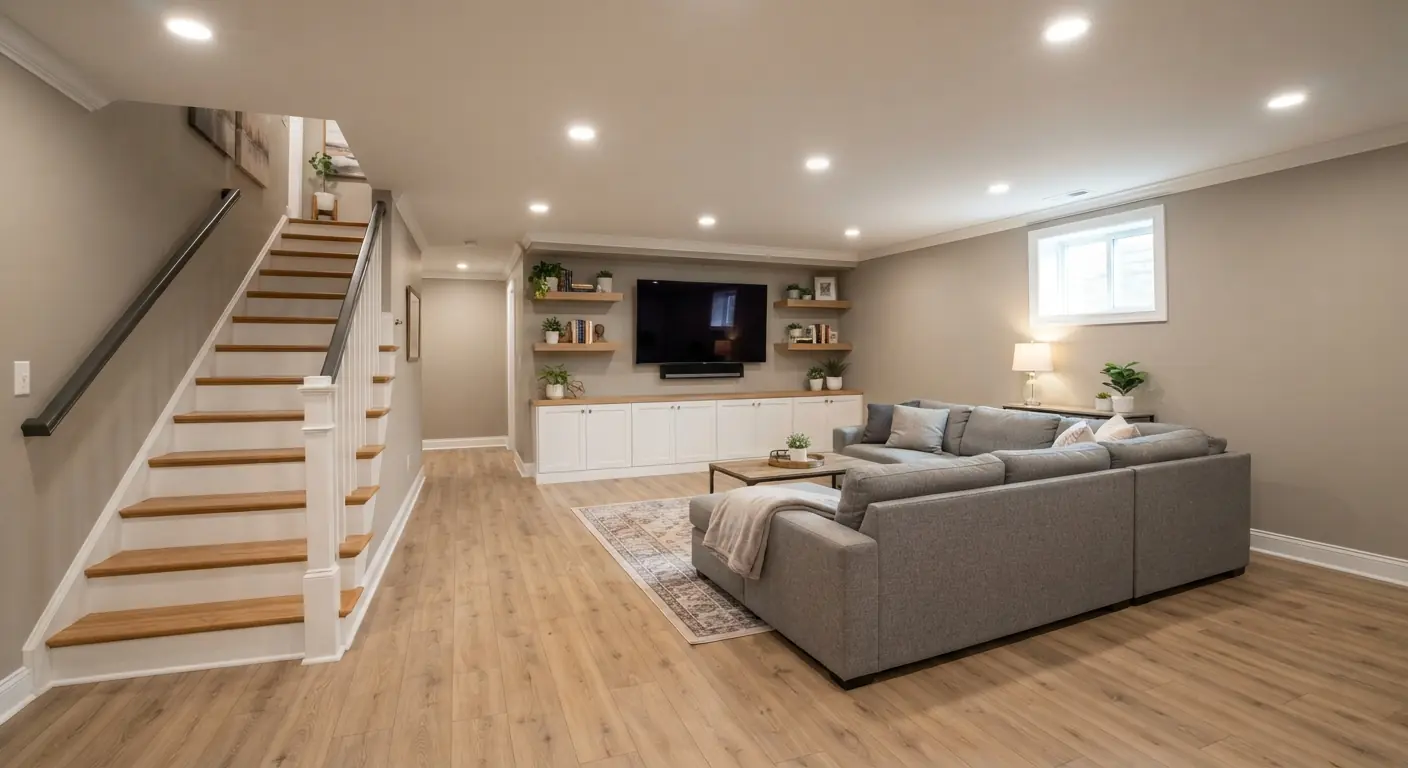
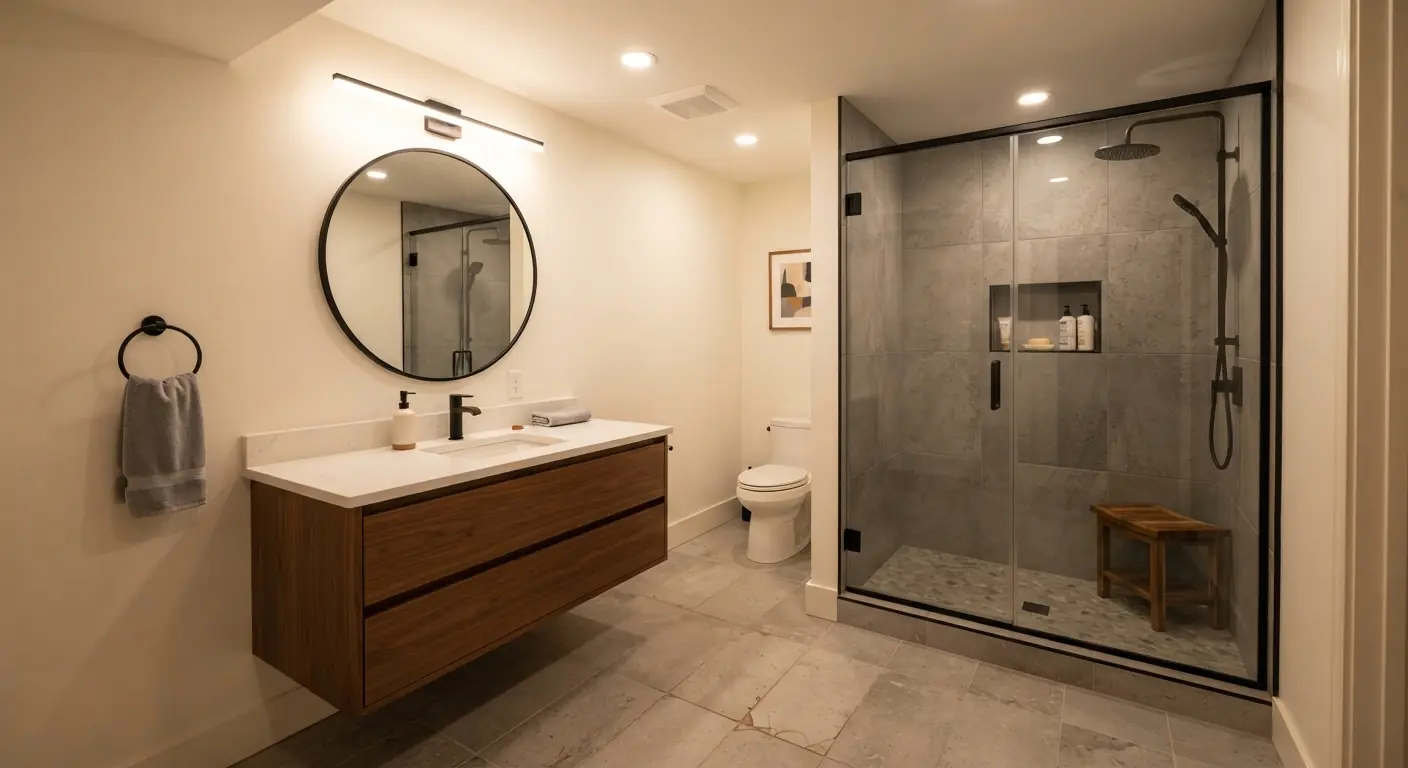
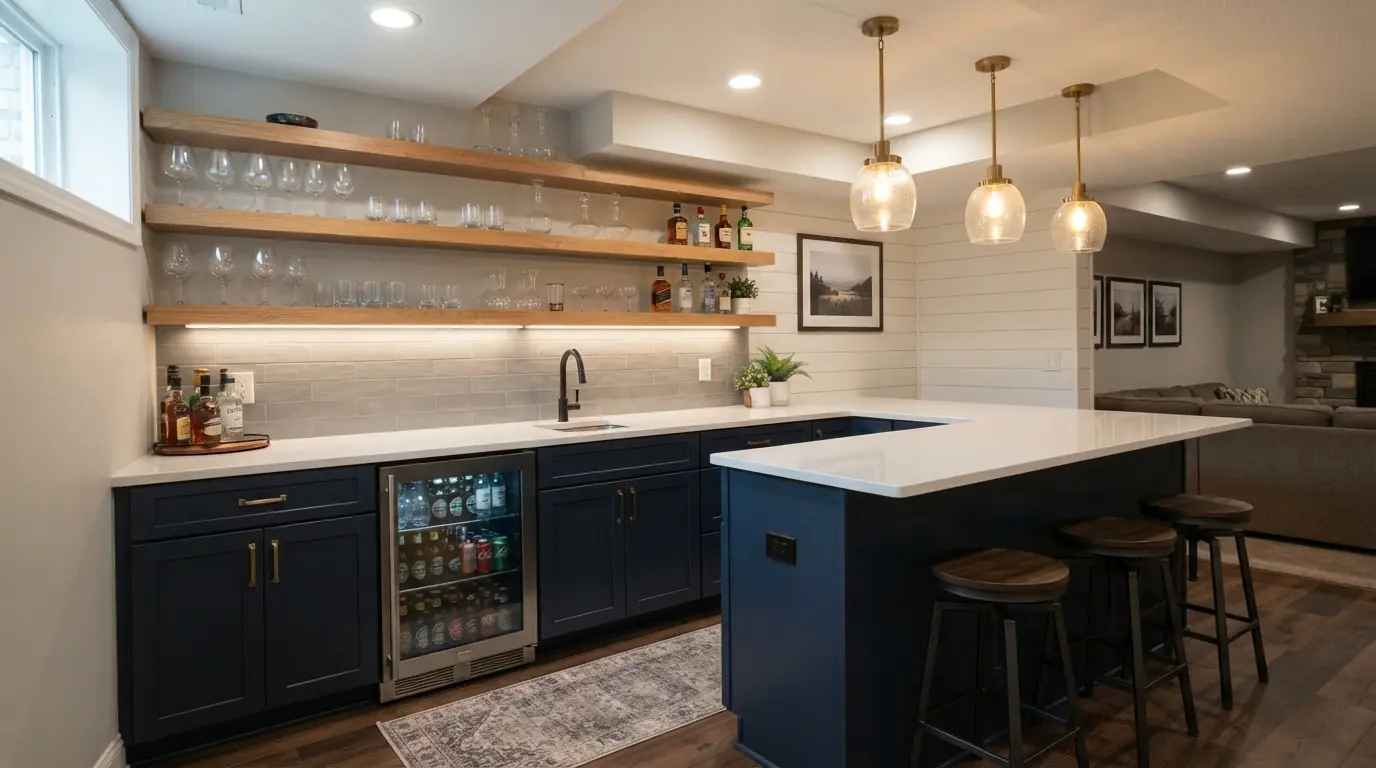
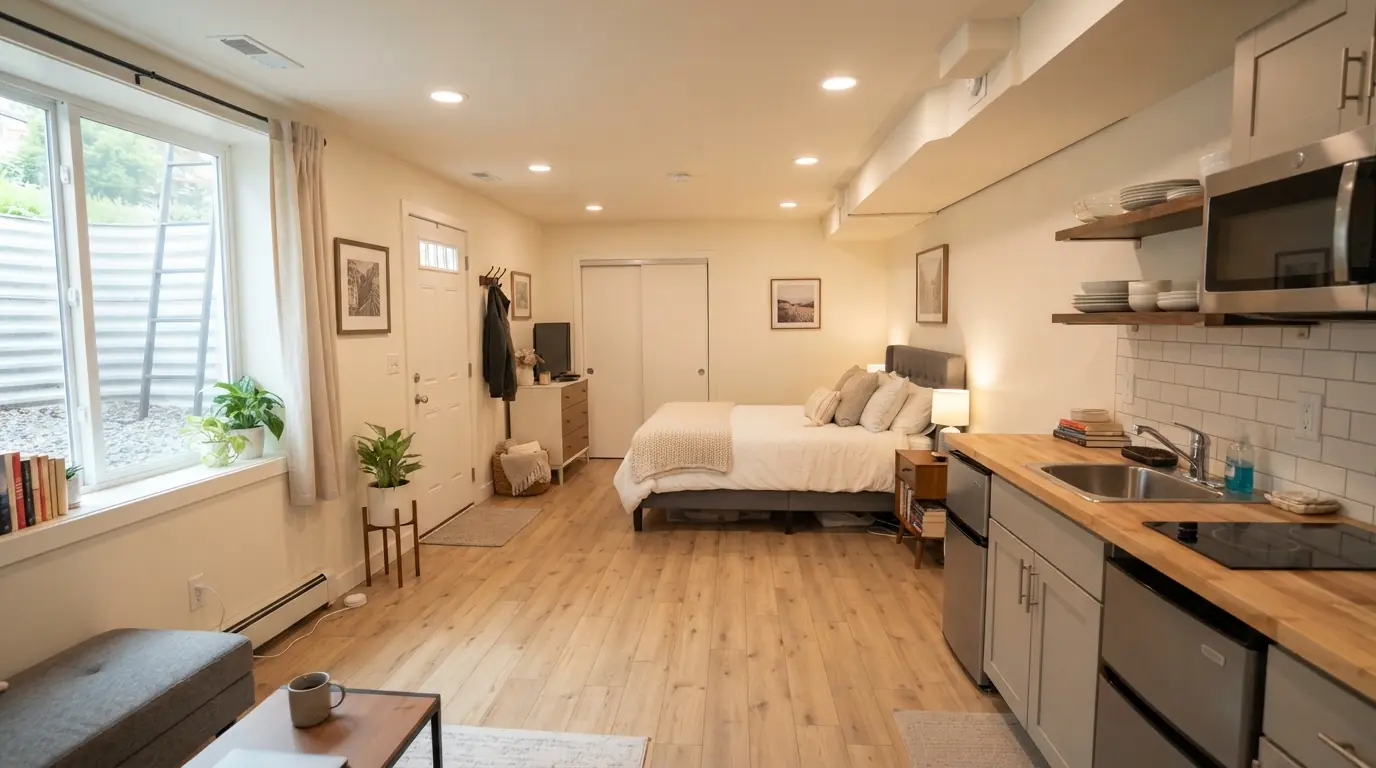
What your Atlanta basement could look like
BeforeAfter
Example of a full basement finish. Your contractor shows you photos of their own local projects at the estimate.
Finishing in Atlanta
What does basement finishing involve in Atlanta?
Finishing is the first build-out of a bare basement: framing, insulation, wiring, drywall, ceilings and floors. In metro Atlanta, the two things that decide the result are water and the slope of the lot. Clay soil holds water against the walls, and many homes have a walkout side that lets you add doors, windows and legal bedrooms.
Before you start
What should Atlanta homeowners know before finishing a basement?
Daylight and walkout basements
Many metro Atlanta homes sit on sloped lots, so the basement often has a walkout wall. That allows French doors, full-size windows and legal bedrooms.
Red clay and water
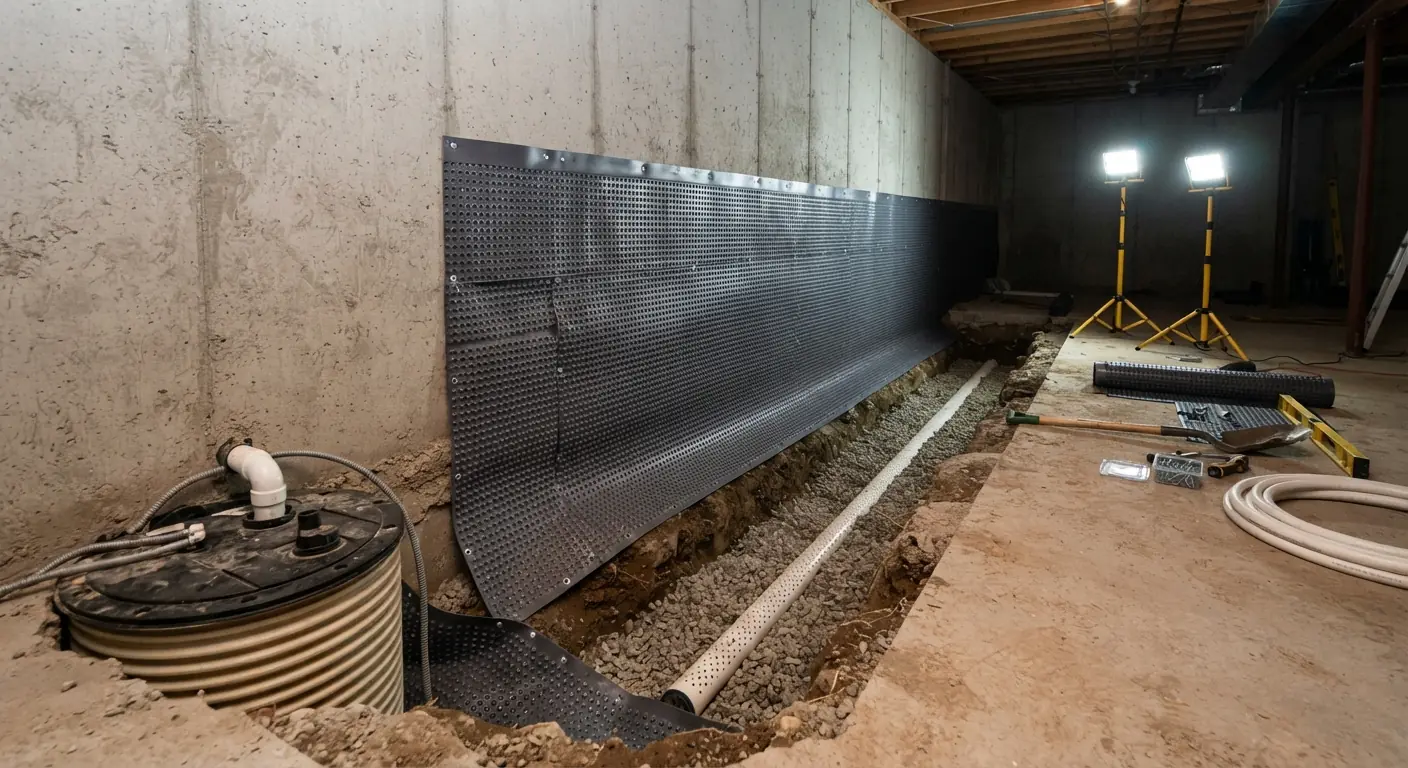
Georgia clay holds water against foundation walls. Your contractor checks for moisture and fixes drainage before any framing goes up.
Permits by jurisdiction
The City of Atlanta, each county and cities like Marietta and Roswell run their own building departments. Your contractor pulls the right permit.
Finishing guide
How a bare Atlanta basement becomes finished living space
What order does an Atlanta basement finish follow?
Water and air checks come first, then framing, trades, inspections and finishes. Each inspection must pass before the next stage starts.
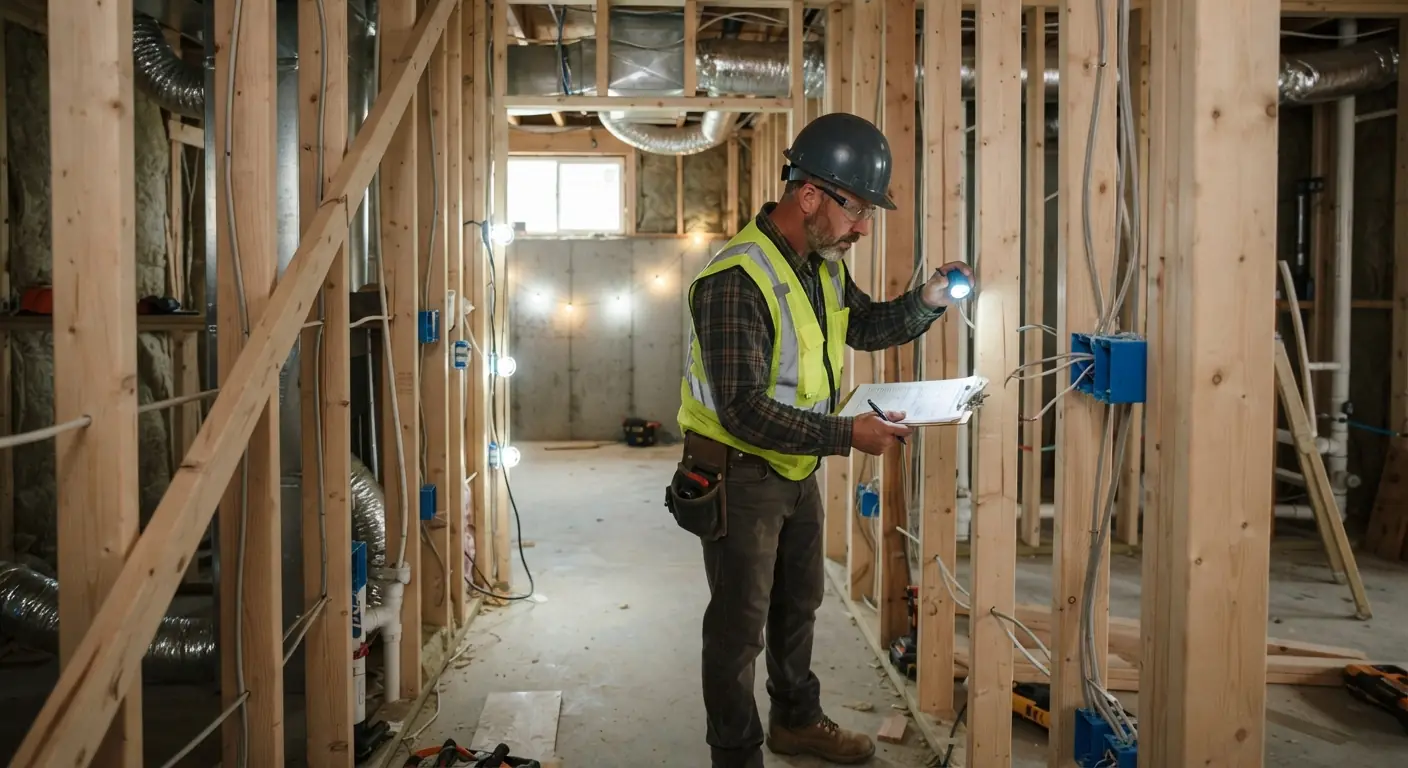
One Atlanta design-build firm lists the usual inspection order below. Your contractor books each one with your city or county.
Framing
Rough electrical
Rough plumbing
Rough HVAC
Insulation
Final inspection
How do you check a bare basement for moisture before finishing?
Run a dehumidifier for a week and read the humidity. The firm's 2026 guide says anything that stays above 60 percent relative humidity needs fixing before construction starts.
The same guide prices interior waterproofing at $1,900 to $6,500 when a basement shows water getting in. A sump pump adds $600 to $1,600.
Should you test for radon before finishing a basement in Atlanta?
Yes. Fulton, Cobb, DeKalb and Gwinnett are EPA Zone 1 counties, with predicted average indoor radon above the 4 picocurie per liter action level.
Testing a bare basement is easy, and a fix is simpler to run before walls and ceilings close in. A short test costs far less than cutting into new drywall later.
Is your basement ceiling high enough to finish?
Most Atlanta basements are, if the finished ceiling sits at 6 feet 8 inches or more. The 2024 code sets that minimum for living space created in an existing basement.
Your ceiling choice changes the math. The firm prices drywall ceilings at $4 to $7 per square foot and drop ceilings at $3 to $6. A drop ceiling keeps access to pipes but costs you headroom.
Does a new basement bathroom need a plumbing rough-in?
A rough-in makes it much cheaper. Look for a capped pipe in the slab near a foundation wall, which builders often leave for a future bath.
Without one, the slab must be cut for drain lines. If the drain sits above the basement floor, you need an ejector pump. The firm budgets $1,500 to $3,500 for the pump, basin and circuit.
How do you plan the layout of a bare basement?
Start with what cannot move. The furnace, water heater, electrical panel and any rough-in pipes fix where some rooms must go.
Keep the panel clear and reachable, because inspectors need clear access to it. Put the bathroom over the rough-in and any bedroom on the walkout wall, where an escape door or full window is easiest.
Leave a storage room around the mechanicals. It keeps service access open and cuts the finished area you pay for.
You can also finish in stages, with the main living area first and a bath or bar later. Ask for plumbing rough-ins and extra circuits in the first stage, before drywall closes the walls.
Does a finished basement need its own heating and cooling?
It needs conditioned air, either from new duct runs or a separate unit. The firm prices new supply and return runs at $2,000 to $6,000.
Georgia basements stay cool on their own, so drying the air matters more than heat. Homeowners often leave dehumidification out of the budget.
How should you insulate basement walls in Georgia?
Rigid foam against the foundation with framed walls in front is the method the firm recommends. It keeps warm, humid summer air off the cool concrete, where it would condense.
Your contractor fits insulation after the rough-in inspections pass. The insulation inspection comes next, before any drywall goes up.
Straight answers. Ask your contractor anything else at the free estimate.
How much does it cost to finish a basement in Atlanta, Georgia?
One Atlanta design-build firm publishes $45,000 to $80,000 for a typical full finish. It prices a 1,000-square-foot basement with one bathroom at $45,000 to $65,000.
How much does it cost to finish a 2000 sq ft basement?
At that firm's basic rate of $35 to $50 per square foot, 2,000 square feet comes to about $70,000 to $100,000 before add-ons. Fixed costs spread out on bigger basements, so the per-foot price can drop.
Do I need a permit to finish my basement in Georgia?
Yes. Turning a bare basement into living space needs a building permit, and your contractor books each inspection.
What flooring works in a finished Atlanta basement?
The same firm calls luxury vinyl plank the most common Atlanta basement floor, at $4 to $8 per square foot installed. Carpet costs less but suffers in any leak.
Can I finish a basement myself in Atlanta?
Georgia does not require a license to work on your own home, but you still need the permit and inspections. Pulling the permit yourself makes you responsible for passing each one.
Does a finished basement count as square footage?
Appraisers report it separately. Fannie Mae counts a level as below grade if any part sits below ground, even a walkout, so it stays out of above-grade square footage.
Free on-site estimate
Get your free Atlanta basement quote
What happens next
1Your contractor calls to book a visit.
2They measure up and talk through layouts and budget.
3You get a written, itemised quote. No obligation.