Basement renovation restores an older or damaged basement to safe, sound condition. It often covers water damage, old wiring, stairs and egress. We match you with one vetted, licensed contractor in your city. They give a free on-site estimate and a written itemised quote.
Older basements carry problems that new paint only hides for a while. Flood damage, outdated wiring, a steep stair or a small window can all hold the space back. A renovation fixes the base first. Wet drywall and carpet come out. Old wiring gets replaced and brought up to code. Stairs get safer rails and treads. A small window can become a code egress window if you want a bedroom. Once the basement is sound, new finishes go on with less risk of redoing them later. Your contractor pulls permits for the repair work and books each inspection. You get one written quote that lists repairs and finishes on separate lines.
KEY POINT
Ask for a quote that lists repairs and finishes as separate lines.
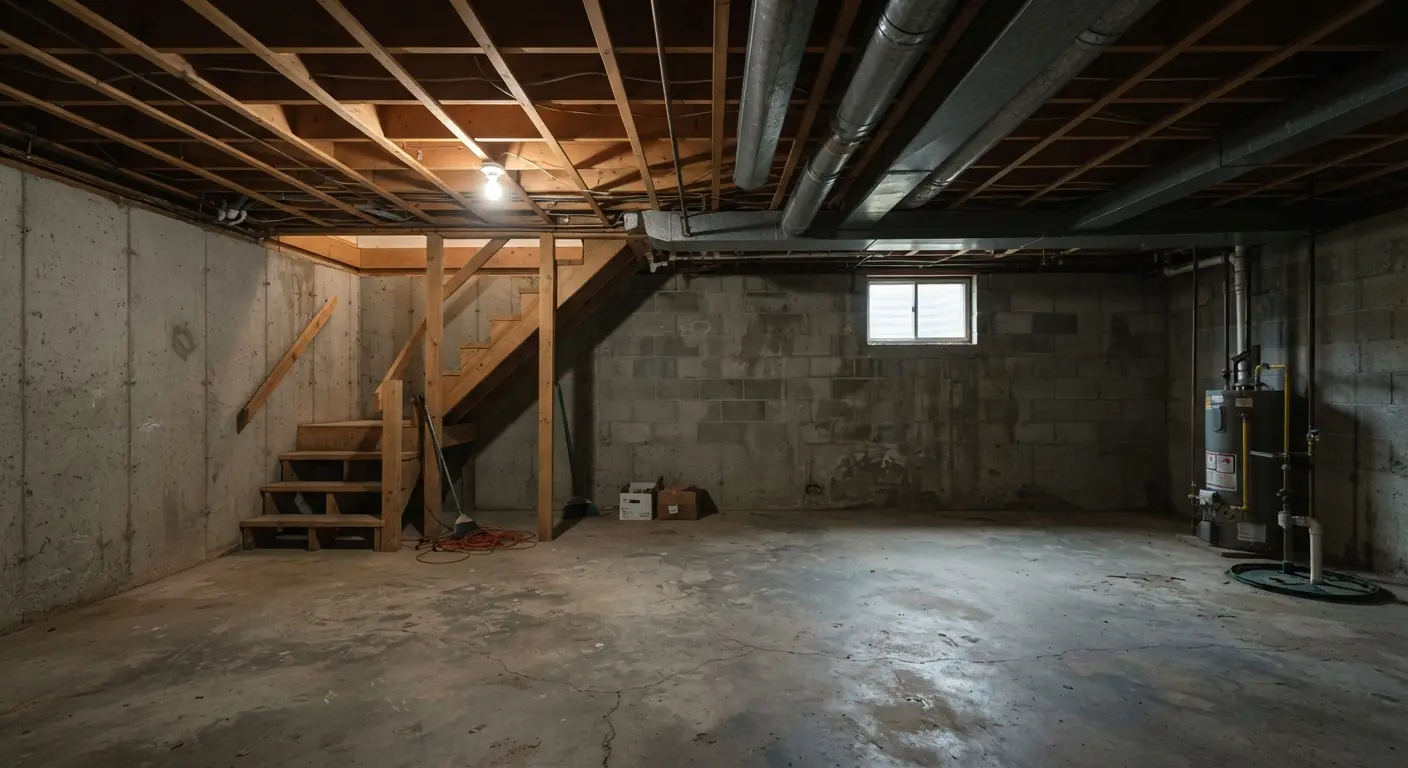
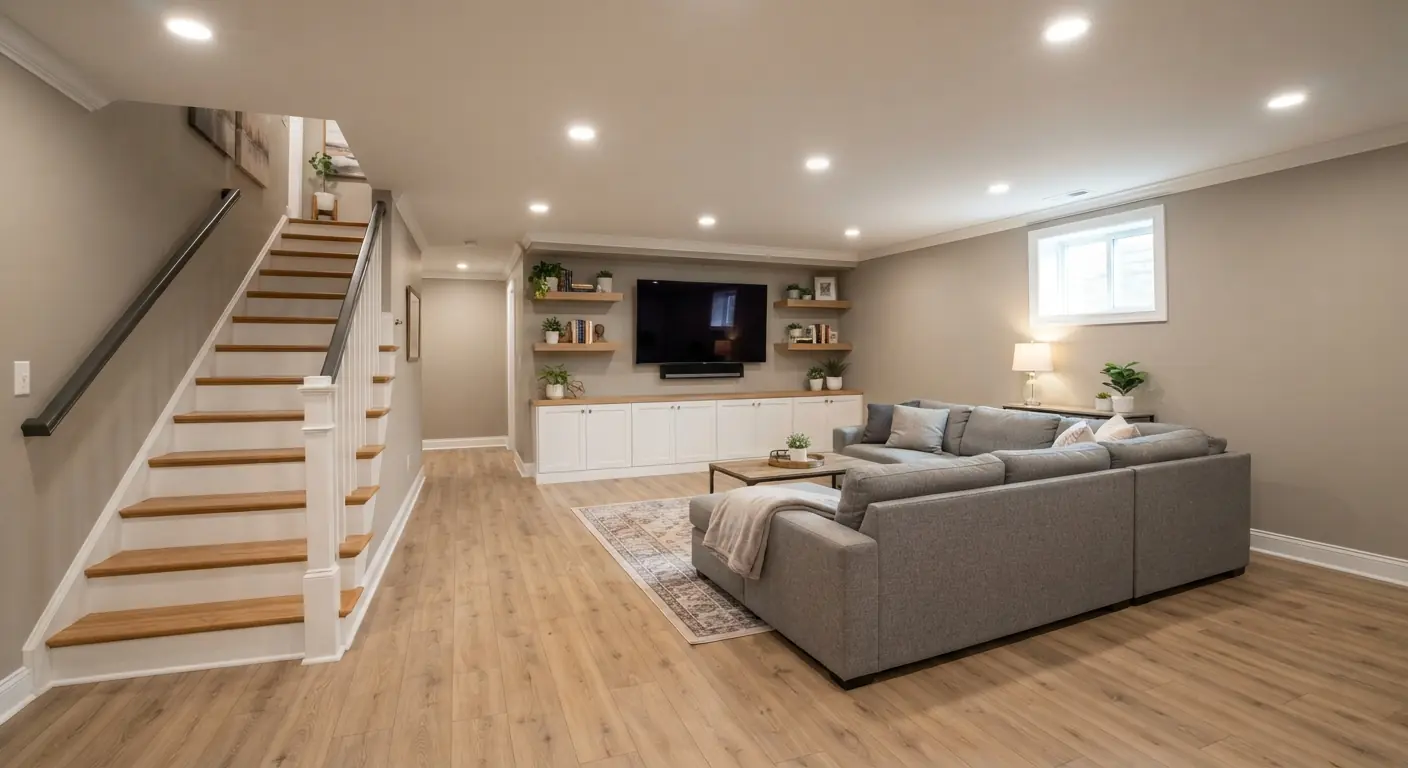
BeforeAfter
What is included
The work in a basement renovation
Each renovation starts with what the contractor finds. Most include some of these parts.
Water damage repair
Wet drywall, insulation and carpet come out. The cause gets fixed before rebuild.
Electrical upgrades
Old or unsafe wiring gets replaced and brought up to current code.
Egress windows
A code egress window or door lets you use a room as a legal bedroom.
Stairs and access
Safer treads, rails and lighting on the basement stair.
Air and moisture control
Ventilation, a dehumidifier plan and vapor control for a drier space.
New finishes
Drywall, paint, trim and flooring once the repairs are done.
Renovation guide
How to renovate an older basement
What's the average cost to renovate a basement?
Expect a renovation to start from HomeGuide's finish range of $30 to $50 per square foot or its remodel range of $30 to $75, then add repairs. Repairs are where renovation budgets move most.
HomeGuide lists these national averages for common basement repairs.
Waterproofing with sealed walls, a pump and a drain: $6,000 to $18,000
Sump pump installed: $600 to $2,500
Electrical wiring for an average basement: $2,000 to $13,500
Egress window installed: $2,000 to $5,000
New basement staircase: $1,000 to $3,000
Is it illegal to finish a basement without a permit?
Finishing a basement without a required permit breaks local building rules in most US cities. The penalty varies by city. It can include fines, a stop-work order or opening walls so an inspector can see inside.
Unpermitted work tends to surface when you sell. A buyer's inspector or lender may ask for permit records. An insurer can question a claim tied to unpermitted work.
Many building departments let you permit existing work after the fact. A renovation is a good time to do it because the walls may already be open.
What should an older basement renovation fix first?
An older basement renovation should fix water and structure first, then safety, then looks. Code rules for stairs are a common gap in older homes.
Stop active leaks and seepage
Have an engineer look at cracks that keep widening
Test for radon and fix levels at or above 4 pCi/L
Replace ungrounded or overloaded wiring
Bring stairs to code: risers no taller than 7 3/4 inches, treads at least 10 inches deep and 6 feet 8 inches of headroom
How do you handle water damage and mold in a basement renovation?
Dry wet materials within 24 to 48 hours and remove anything that stayed wet longer. The EPA says prompt drying stops mold from growing in most cases.
The EPA says a moldy area under about 10 square feet is usually a job you can handle yourself. Larger areas and any damage from sewage call for a trained contractor.
Then keep the air dry. The EPA advises indoor humidity below 60 percent, ideally 30 to 50 percent.
Does a renovated basement need an egress window?
A renovated basement needs an egress window when the work creates a new bedroom. Under the International Residential Code, repairs and alterations to an existing basement do not trigger egress on their own.
Each new sleeping room needs its own emergency escape opening. The code accepts an existing operable window in some cases. It must open at least 4 square feet, 22 inches high and 20 inches wide. Your contractor and the building department decide whether yours qualifies.
A new egress window means cutting the foundation wall and digging a well outside. Wells deeper than 44 inches need a ladder or steps.
How do you renovate a small basement?
Renovate a small basement by giving it one or two clear jobs. A family room with a half bath fits better than four cramped rooms.
Keep the plan open so light carries through. Build storage under the stair and along short walls. Pick recessed or low-profile lights so the ceiling keeps every inch of height.
What are the red flags of a bad renovation contractor?
The biggest red flag is a contractor who wants you to take on the risk. Watch for these signs before you sign.
Asks you to pull the permit in your own name
Gives a single lump-sum price with no line items
Cannot show a current license or insurance certificate
Wants a large cash deposit before setting a schedule
Renovation cost depends on how much damage and outdated work the contractor finds, and the Atlanta cost guide shows the main price drivers. Range: typical full finish in metro Atlanta, one local firm's published range, checked September 2026.
Straight answers. Ask your contractor anything else at the free estimate.
What are common basement remodel mistakes?
Common mistakes include finishing over a moisture problem, skipping egress in a bedroom and burying valves behind drywall. Each one costs more to fix after the walls close.
What is the most expensive part of finishing a basement?
Materials are the largest cost, at 60% to 80% of the total per HomeGuide. Plumbing and waterproofing are the repair lines that swing the budget most.
How long does a basement renovation take?
HomeGuide puts a basement finish at 4 to 16 weeks. Renovations add time for repairs and any drying or mold work before the rebuild.
Can you renovate a basement with a low ceiling?
You can renovate a low basement if living areas reach 7 feet and beams or ducts clear 6 feet 4 inches. Below that, moving ducts or lowering the floor are the options. Lowering the floor needs an engineer.
Should I test for radon before renovating a basement?
Yes, test for radon before you close up the walls. The EPA says to fix a home at 4 pCi/L or higher. A mitigation pipe is easier to route before new walls go up.
Do I need a structural engineer for basement cracks?
You need a structural engineer for cracks that keep growing, walls that bow or floors that heave. Thin, stable shrinkage cracks are common and usually need only sealing.
Ready to start your basement renovation?
Get a free on-site estimate from one vetted local basement contractor.