Basement finishing turns a bare Fort Collins basement into heated, lit, permitted living space. We match you with one vetted local contractor. A typical full finish runs $50,000 to $110,000, and it starts with a free on-site estimate.
Updated September 2026Fort Collins and 4 nearby cities
Free on-site estimate
Written, itemised quote
Permits and inspections handled
One contractor per city
What a full finish looks like
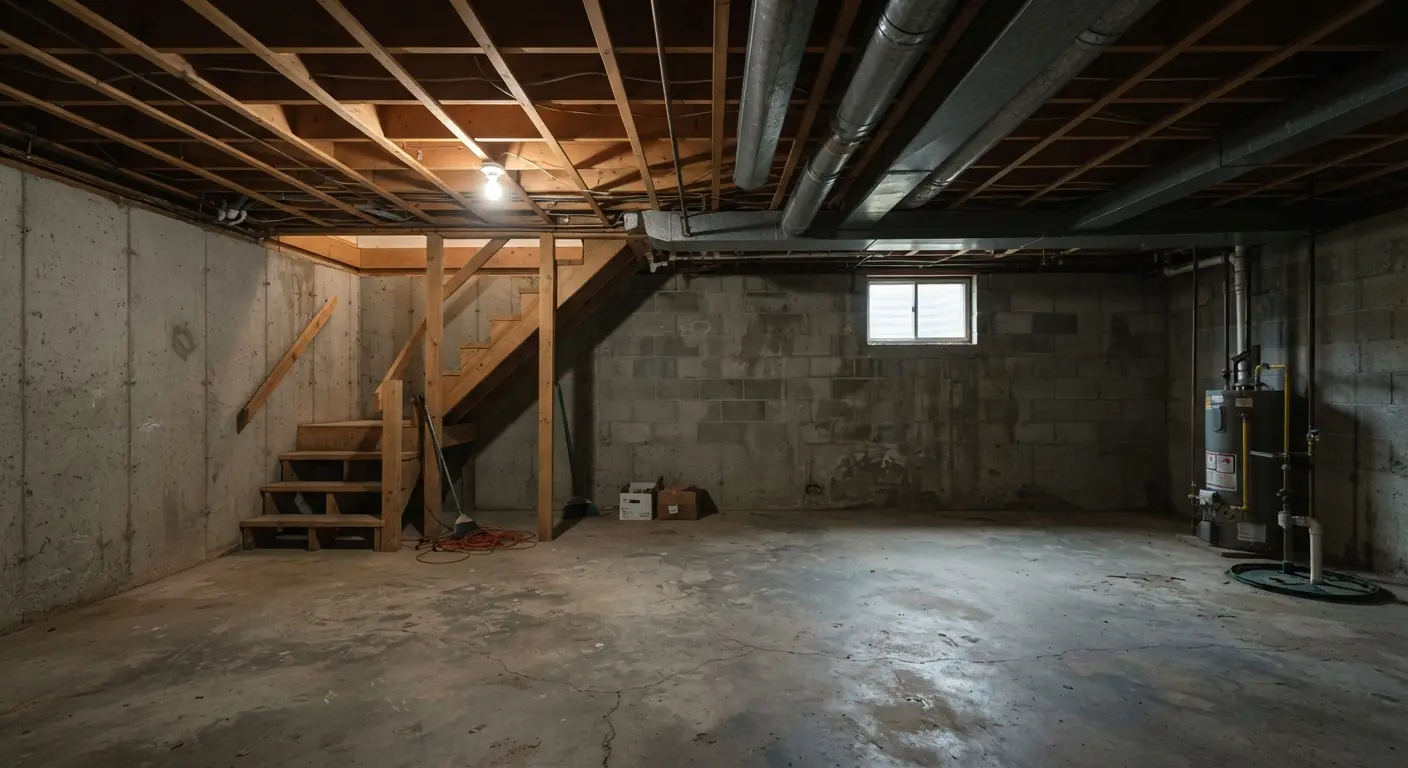
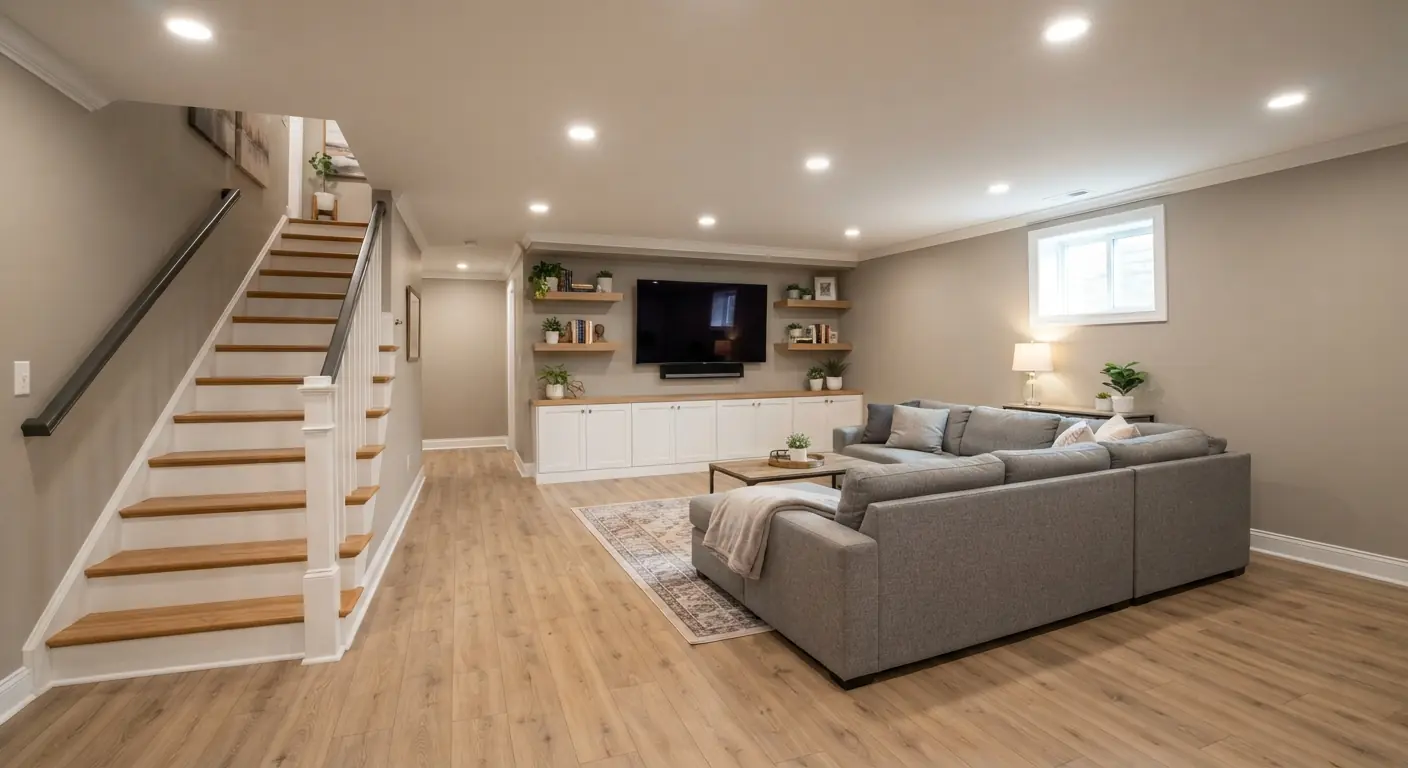
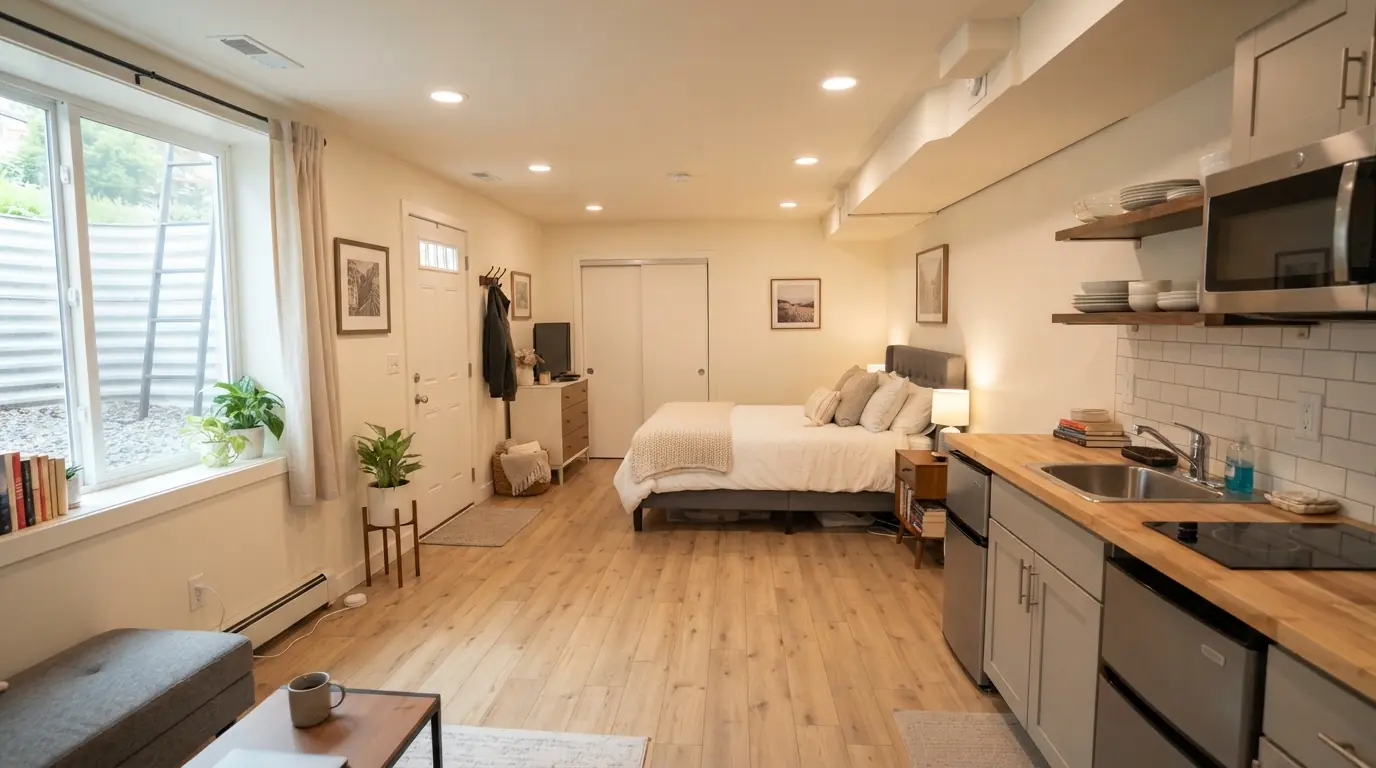
What your Fort Collins basement could look like
BeforeAfter
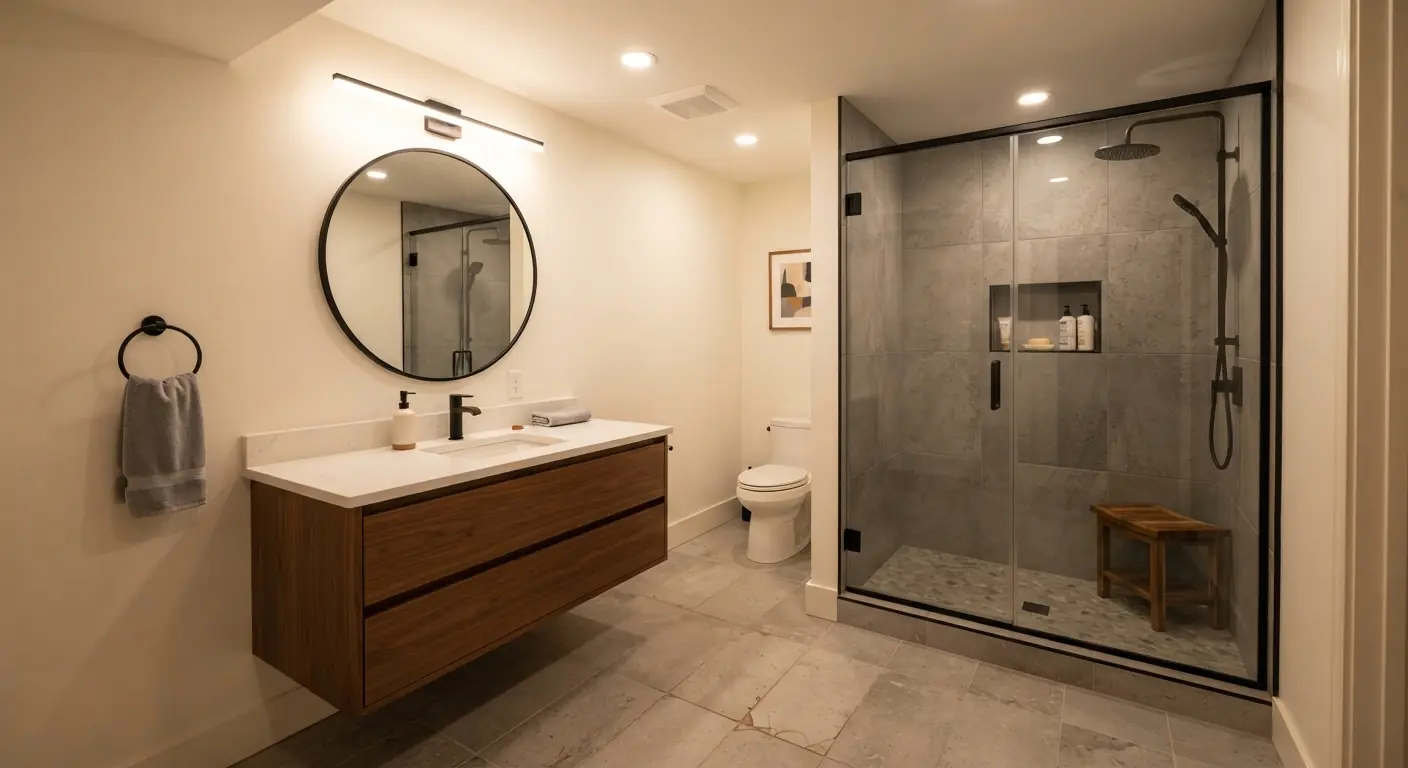
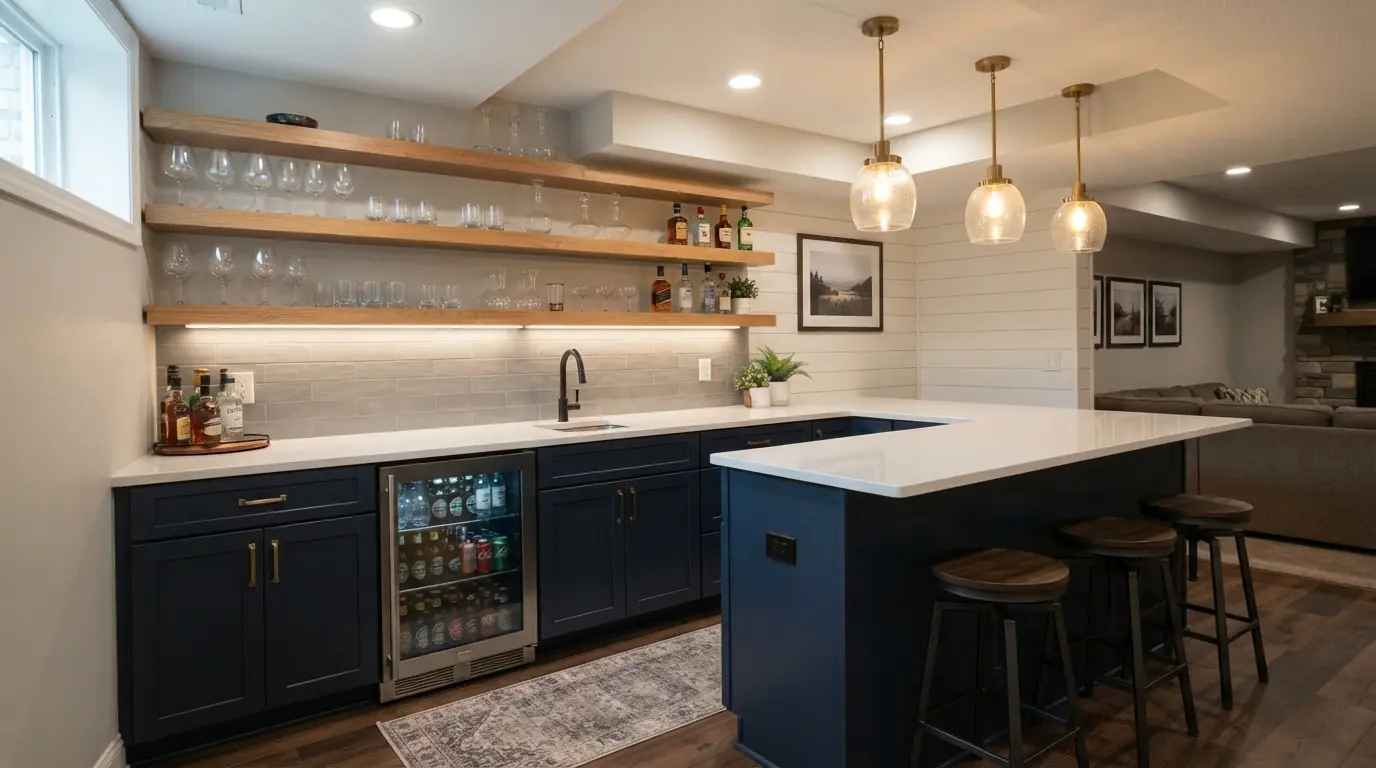
Example of a full basement finish. Your contractor shows you photos of their own local projects at the estimate.
Finishing in Fort Collins
What does basement finishing involve in Fort Collins?
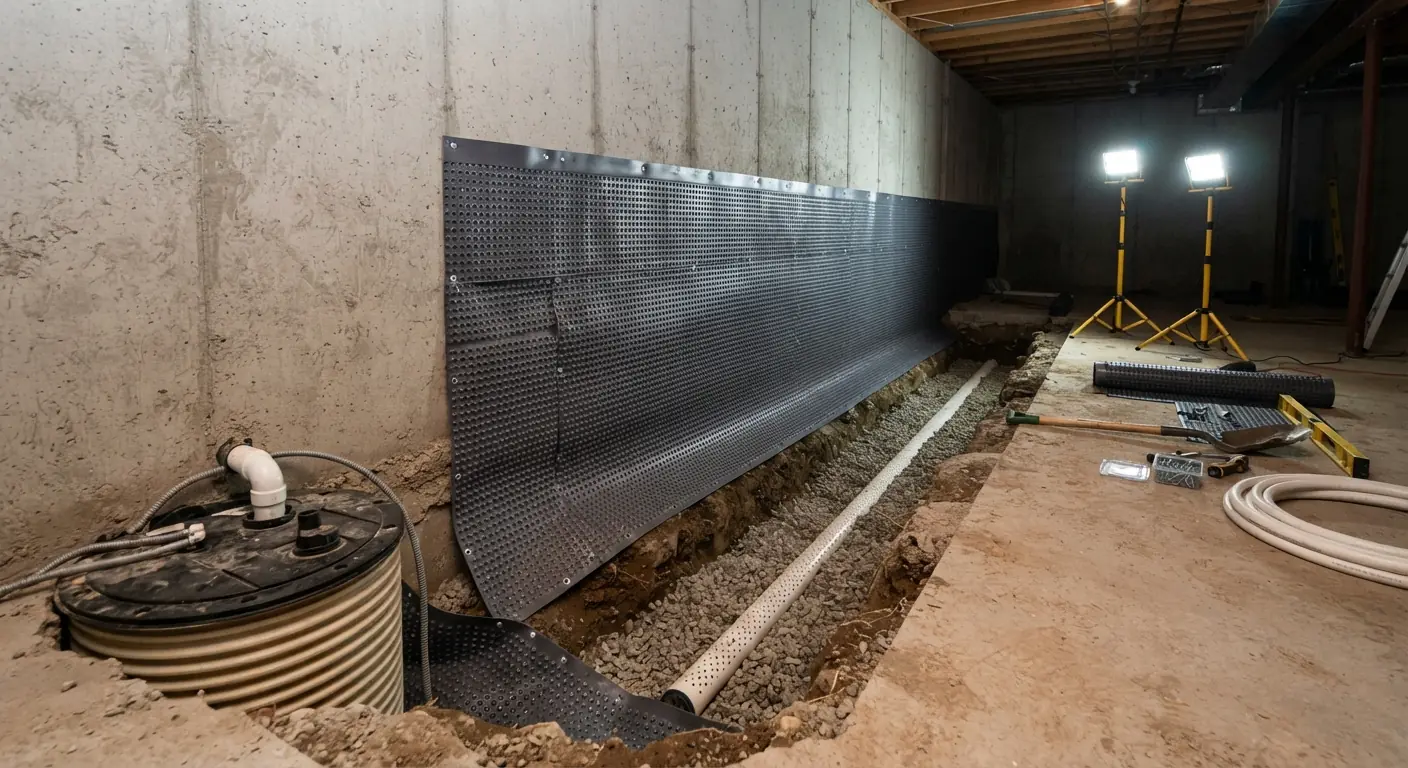
Finishing is the first build-out of a bare basement: framing, insulation, wiring, ducts, drywall, ceilings and floors. Many Fort Collins homes, including newer ones, were sold with the basement left unfinished. The ground under them matters most here. Northern Colorado clay can swell and lift a slab, and radon comes up through the same soil. A good finish plans for both before the first wall goes up.
Before you start
What should Fort Collins homeowners know before finishing a basement?
Clay that swells
Much of Northern Colorado sits on clay soil that swells when wet. Heaved basement slabs are a common sign. Your contractor checks the floor and plans walls that allow for movement.
Radon below grade
Radon is a real concern in Larimer and Weld counties. A test before you close in the walls tells you if a fix belongs in the plan.
City, town or county permit
Fort Collins, Loveland, Greeley, Windsor and Timnath each issue their own permits. Larimer or Weld County covers homes outside town limits. Your contractor files with the right one.
Finishing guide
How a bare Fort Collins basement becomes finished living space
What inspections does a Fort Collins basement finish need?
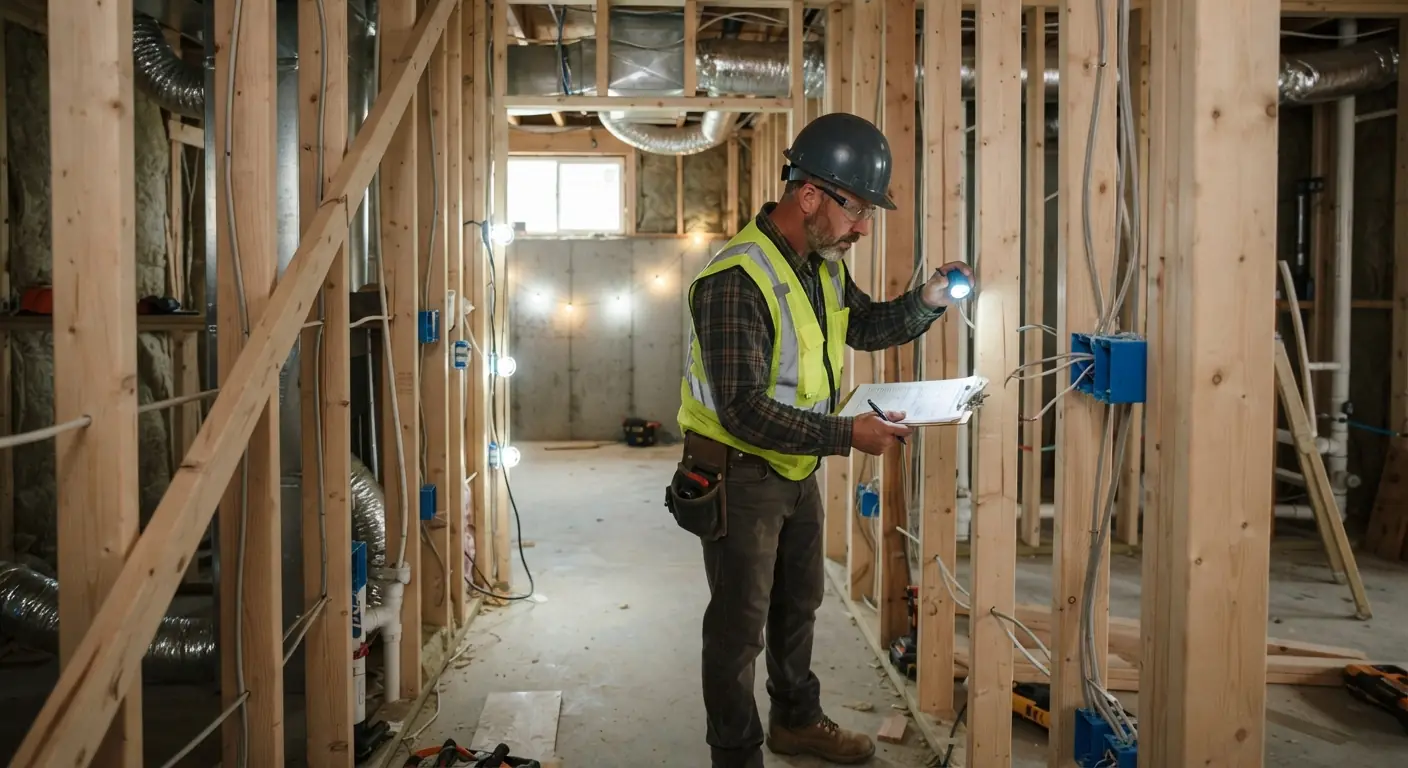
A Fort Collins basement finish goes through rough, insulation and final inspections. The city's Residential Basement Finish Guide lists them in this order:
Underground plumbing, only if new pipes go under the slab
Rough inspections for plumbing, ducts, wiring, gas and framing, which can share one day
Insulation, which must pass before any drywall goes up
Finals for plumbing, electrical, mechanical and the building
How high does a basement ceiling need to be in Fort Collins?
Bedrooms, living areas and hallways need at least 6 feet 8 inches. Showers, storage rooms, laundry rooms and spots under ducts or existing beams can drop to 6 feet 4 inches.
Do basement walls need to float in Northern Colorado?
Floating walls are allowed in Fort Collins but not required. They hang from the joists and leave a gap above the slab, so a floor that heaves does not push the wall into the ceiling.
The Colorado Geological Survey calls expansive soil the state's most significant geologic hazard. It notes that building without room for basement floor movement is a very common source of damage.
Weld County's basement handout says non-bearing walls in heave areas should allow at least 1.5 inches of floor movement. Your contractor looks for cracked or lifted slabs at the estimate.
Should you test for radon before finishing a Fort Collins basement?
Yes. Larimer County Health reports an average home radon level of 7.8 pCi/L, against a national average of 1.3. The EPA advises a fix at 4 pCi/L or more.
The county also advises a new test when you start using a basement as a bedroom, office or family room. Testing the bare space first lets a sub-slab system go in before walls close.
How should you insulate basement walls in Fort Collins?
The city accepts three options for uninsulated foundation walls:
R-19 continuous, such as blanket or foam board
R-13 between studs plus R-5 continuous
R-19 between the framing studs
What makes a basement bedroom legal in Fort Collins?
It needs an emergency escape opening and at least 70 square feet, with no side under 7 feet. New escape windows below grade need a net clear opening of 5.7 square feet.
New window wells must drain to the foundation drain if there is one. They also need a clear path to the sidewalk or street, and a well by a walkway needs fall protection.
Smoke alarms go inside and outside each sleeping area. A carbon monoxide alarm goes outside and within 15 feet of the bedrooms.
What plumbing and wiring rules apply to a basement finish?
New plumbing fixtures in a Fort Collins basement need a backwater valve. Fixtures must also be low flow: 1.28 gallons per flush for toilets, 1.8 gallons per minute for showers and 1.5 for faucets.
Every basement outlet needs arc fault, ground fault and tamper resistant protection, except that bathroom outlets skip arc fault. A bathroom gets its own 20 amp ground fault circuit and an exhaust fan to the outside.
Rooms on forced air need a supply and a return path. The city does not accept door undercuts as the return.