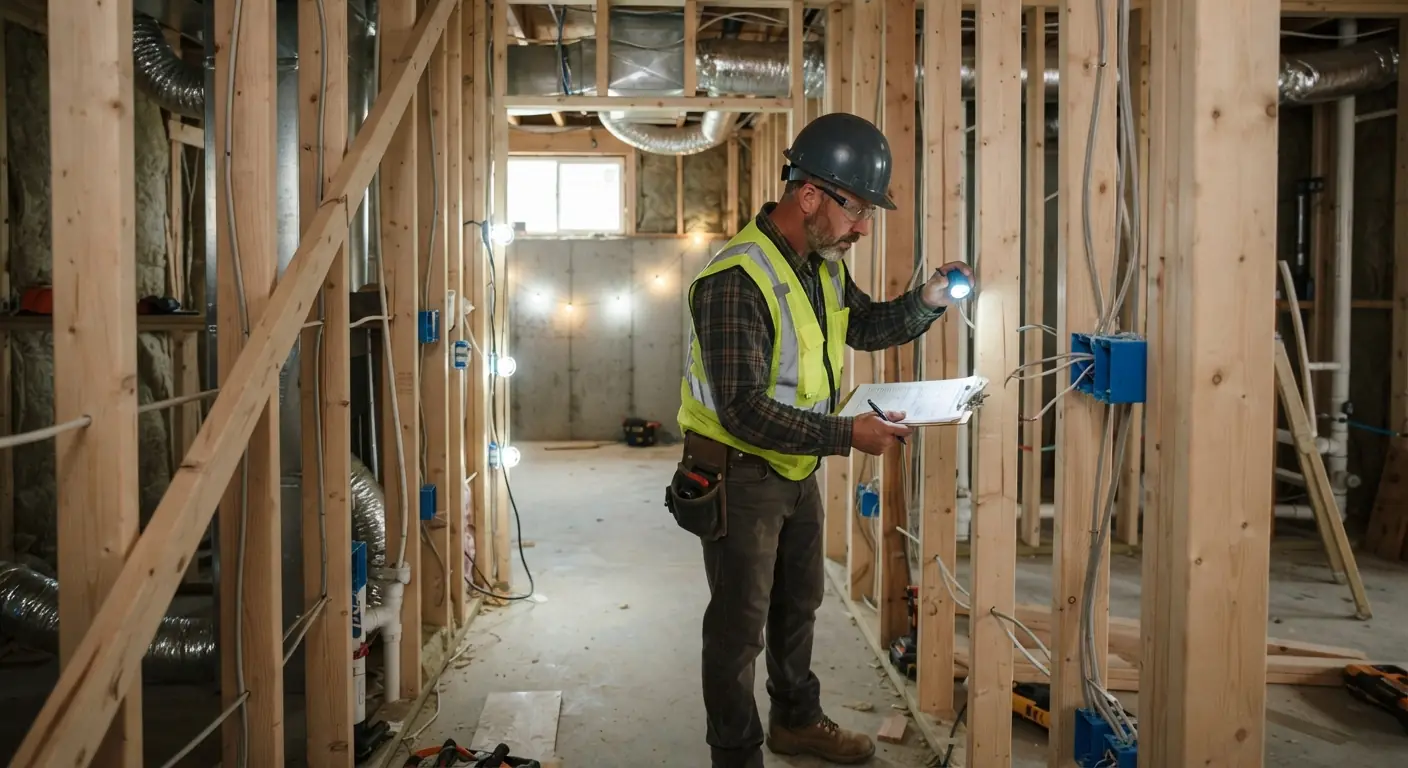
A radon mitigation system usually costs about $800 to $2,800 to install on a basement or slab, and about $1,200 to $3,500 over a crawlspace.1 After that, the fan costs roughly $5 to $10 a month to run and needs replacing every 5 to 10 years.1 Your foundation, the number of suction points and the pipe route set the price. If your test reads 4 picocuries per liter (pCi/L) or higher, EPA says to fix the home.2
TL;DR
- Budget $1,200 to $2,000 for a standard sub-slab system.3 Keep a reserve up to about $3,000 if your basement is large, split into sections or already finished.41
- Crawlspaces cost more because the soil has to be covered and sealed first. A sump, drain tile or existing passive pipe usually brings the price down.1
- Running costs are small. Expect a few dollars a month for the fan and a $300 to $600 fan swap every 5 to 10 years.1
- Homeowners insurance usually doesn't pay.31 In a sale the seller typically pays, but that's negotiable.3
- If you're finishing the basement, test and fix radon before framing. Routing pipe through finished rooms adds time, and concealing it is part of the price.15
How much does a radon mitigation system cost to install?
Plan on $1,200 to $2,000 for a standard sub-slab system, HomeGuide's average installed range.3 Its national average is $1,600.3 Public and nonprofit figures sit on either side, from a $1,200 national average5 to New York's $2,500 average.6 The design, and so the price, depends on how the home is built.5
HomeGuide's full range is much wider. It puts the minimum at $500 and the maximum at $8,000.3 EPA's own summary is that most homes can be fixed for about the same cost as other common home repairs.7
Publishers measure different things, so compare each figure with its scope.
| Publisher | What the figure covers | Published figure |
|---|---|---|
| National Radon Program Services (Kansas State University with EPA) | National average | $1,200, with $800 to $1,500 common5 |
| HomeGuide | Researched and member-reported projects | $1,200 to $2,000 average range, $1,600 national average3 |
| Peerless Environmental | Sub-slab system on a basement or slab | $800 to $2,8001 |
| Minnesota Department of Health (2024) | General range | $1,500 to $3,0004 |
| New York State Department of Health | Average cost | About $2,5006 |
| University of Nevada, Reno Extension | Slab or basement home, certified or licensed contractor | About $2,5008 |
Which number should you budget from? Start with HomeGuide's $1,200 to $2,000.3 It's dated February 2026 and built from research plus project costs its members reported.3 Then hold a reserve up to the state health department figures if your basement is big, split into sections or already finished.64 Each extra suction point adds about $300 to $600.1
What does each foundation type and system variant cost?
Foundation type is the biggest price driver, because it decides which radon mitigation system the house needs.1 A basement or slab usually gets active sub-slab suction at about $800 to $2,800 installed.1 A crawlspace needs a sealed plastic membrane over the soil and runs about $1,200 to $3,500.1 An existing sump, drain tile or passive pipe usually costs less.1
By foundation. Peerless Environmental, a radon contractor, publishes these as national averages rather than its own prices.1
| Your foundation | System it calls for | Installed cost |
|---|---|---|
| Basement or slab-on-grade | Active sub-slab depressurization | $800 to $2,8001 |
| Crawlspace | Sub-membrane depressurization | $1,200 to $3,5001 |
| Existing perimeter drain or sump | Drain-tile or sump suction | $800 to $1,5001 |
| New home with a passive pipe already in place | Add a fan to the existing pipe | $500 to $1,0001 |
| Larger or sectioned slab | Each extra suction point | $300 to $6001 |
| Any foundation with an existing system | Fan replacement only | $300 to $6001 |
By system variant. HomeGuide groups its averages by system type.3
| System | Installed cost |
|---|---|
| Active soil depressurization | $1,200 to $2,000, or $2,500+ for larger homes3 |
| Drain-tile suction | $900 to $1,8003 |
| Sump pit sealing and cover | $900 to $2,5003 |
| Block-wall depressurization | $1,800 to $3,0003 |
| Above-slab air pressure differential barrier | $500 to $1,2003 |
| Heat recovery ventilation | $1,300 to $2,2003 |
| Energy recovery ventilation | $1,500 to $2,5003 |
| Carbon filter for well water | $1,200 to $1,8003 |
| Aeration for well water | $4,000 to $5,0003 |
Basement or slab
Sub-slab suction is the most common design.1 The installer cores at least one 4 to 6 inch hole through the slab, digs a small pit under it and sets a PVC pipe in the hole.5 A fan on that pipe creates a vacuum under the slab.5 One vent pipe is often all a house needs. More suction points come in when the soil under the slab is tight or interior footings split it into sections.5 Installation usually takes one visit of about one to four hours.1
Crawlspace
A crawlspace has no slab to drill, so the soil gets covered instead. A high-density polyethylene sheet goes down, the seams are sealed and the edges are sealed to the foundation walls. A pipe under the sheet connects to the fan.5 The sealing work is why crawlspace systems cost more.1 Don't confuse this with full crawl space encapsulation. HomeGuide prices that larger job, which wraps floors and walls, at $3,000 to $15,000.3
Sump pit or drain tile
A house with a sump or French drain can often use it to collect radon from the soil underneath.5 The pipe connects to a sealed sump lid or to the drain, and the installer has to keep water drainage and the sump pump working.5 If you're adding drainage as part of waterproofing the basement before you finish it, ask whether the radon system can share that sump.
Block walls and other variants
Block-wall depressurization is built for block foundations and draws gas out through the cracks in the walls.3 HomeGuide notes wall-based systems may not be as effective at removing radon. Ventilators lower radon too, but contractors mostly use them where a suction system won't fit.3 Sealing cracks alone hasn't proven reliable or durable. Installers seal as one step inside a larger system.5
New homes with a passive pipe
Some builders run a passive radon pipe during construction. If a test still reads 4 pCi/L or higher, a certified mitigator can activate it by adding a fan.6 Adding the fan is the cheapest path in the foundation table, at $500 to $1,000.1 New York's health department says every new home should be tested, even one built to resist radon.6
Radon in well water
Water systems pull radon out of groundwater and well water before it enters your home. Carbon filters cost less, but aeration systems work better.3 Well water is a separate problem from soil gas under the basement, and a separate quote.
What does a radon system cost to run each month?
Electricity is the main running cost. A typical 70-watt fan runs nonstop and uses about 613 kilowatt-hours a year. That's about $5 to $10 a month, or $67 to $123 a year, at regional average rates.1 HomeGuide's estimate lands in the same place, at about $70 to $80 a year.3
Fan replacement
The fan wears out long before the pipe. When it does, only the fan is swapped, for about $300 to $600 installed, and the pipe stays where it is.1 HomeGuide and Peerless both give fans 5 to 10 years.31 National Radon Program Services puts fan life at 10 to 15 years.5 Fan warranties typically run about 5 years.5 The piping itself lasts 20 to 50+ years.3
Heating and cooling loss
The fan also pulls some heated or cooled house air out through the slab. National Radon Program Services calls this a potential extra cost that good sealing can keep down.5 Peerless says it stays negligible for most homes.1 Neither puts a dollar figure on it, so plan on the electricity figure and treat heat loss as the variable.
Retesting
A system needs checking. New York's health department says to retest every two years if you have a mitigation system.6 A home test kit costs $10 to $30, and a professional test runs $125 to $400.3
Ten-year cost of ownership
Here's what a basement or slab system costs over ten years. The totals are our arithmetic from the figures above, and they leave out heating and cooling loss.
| Item | Low | High |
|---|---|---|
| Install, basement or slab | $800 | $2,8001 |
| Fan electricity, 10 years at $67 to $123 a year | $670 | $1,2301 |
| One fan replacement | $300 | $6001 |
| Five home retest kits, one every two years | $50 | $15036 |
| Ten-year total | $1,820 | $4,780 |
How much extra does a finished basement add to the cost?
Expect to pay more, and the mitigator prices the add-on in your quote. Routing pipe through finished rooms adds time and complexity.1 So settle radon before framing: test, fix and plan the pipe route before the drywall goes up.
The cost guides we checked don't publish a flat add-on for finished space. What they do say is that part of any quote is the cost of hiding the system in the house.5 You have three routes, and each one changes the price.
Up the outside wall
The pipe can run up the outside of the house. It can reduce radon quite well, though it looks less tidy than a pipe hidden in an interior closet.5 In a finished basement it also means less cutting into walls you've already paid for.
Through a closet or chase
A pipe hidden inside the house looks better, and concealing it is part of what you pay for.5 Expect your mitigator to open drywall or ceiling to get the pipe through, and budget for the patch and paint. The fan still can't sit in your living space. Mitigation standards place it in an attic, outdoors or in a garage with no living space above.5
Wherever the pipe runs, the standards also control where it ends. The discharge must be at least 10 feet above grade, at least 10 feet from any opening less than two feet below it, and at or above the eave of the roof.5 These rules come from EPA's 1994 radon mitigation standards, ASTM E2121 and AARST's 2006 standard. Florida, Illinois and Pennsylvania set their own.5 Your state's version and local adoption can differ, so let your mitigator confirm what applies.
Before the drywall goes up
New York's health department says installing a radon system during construction is easier and less expensive than adding one to a finished house.6 With framing open, pipe can be concealed inside a wall.5
The order that works inside the basement finishing steps:
- Test the basement before you design the space.
- If it reads 4 pCi/L or higher, have a certified mitigator design and install the system.2
- Agree on the pipe route with your basement contractor before framing.
- Retest after the finish is done. New York's health department recommends testing after major renovations.6
If you're planning the build-out now, get a written quote for finishing your basement and bring your radon result to the free on-site estimate. Your contractor measures and checks moisture there, so it's the right time to settle where the pipe runs. If the basement is already finished and you're remodeling it, open walls are a good chance to move an outside pipe indoors.
Moisture matters here too. Soil air under a basement floor is often damp, and a badly installed system lets that moisture condense and pool in the pipe. In an unheated space it can freeze.5 A well-built system may even leave the basement a little drier.5
Is radon mitigation worth the money?
Yes, if your test reads 4 pCi/L or higher.2 EPA says to fix your home at that level and to consider fixing between 2 and 4 pCi/L.2 EPA links radon to about 21,000 lung cancer deaths a year.9 Some systems cut indoor radon by up to 99 percent.7
EPA ranks radon as the second leading cause of lung cancer overall. It's the leading cause among people who have never smoked, and about 2,900 of those yearly deaths fall in that group.9
Now set the price against what a basement finish costs. Basement Remodeling Co. publishes these metro finish ranges, checked September 2026:
| Metro | Published finish range |
|---|---|
| Denver | $30,000 to $90,000 |
| Colorado Springs, typical 1,000 sq ft | $30,000 to $75,000 |
| Fort Collins | $50,000 to $110,000 |
| Atlanta | $45,000 to $80,000 |
Against Denver's range, an $800 to $2,800 radon system works out to roughly 1% to 9% of the finish. You can see local numbers for basement finishing in Denver, basement finishing in Colorado Springs, basement finishing in Fort Collins and basement finishing in Atlanta.
The 2 to 4 pCi/L range is a judgment call. EPA says reducing radon below 2 pCi/L is difficult.9 New York's health department says most homes can now be brought to 2 pCi/L or below.6 If you're in that band and finishing the basement anyway, the cost of acting before the walls close is at its lowest.
What radon level is high enough to fix?
EPA's action level is 4 picocuries per liter of air, written pCi/L. At or above it, EPA says fix your home. Between 2 and 4 pCi/L, it says consider fixing.2 For scale, the average indoor level is about 1.3 pCi/L and outdoor air averages about 0.4 pCi/L.9
EPA's risk table shows why the line sits where it does. The figures are lifetime lung cancer cases per 1,000 people exposed at each level.9
| Radon level | Never smoked | Smoked | What EPA says to do |
|---|---|---|---|
| 20 pCi/L | About 36 | About 2609 | Fix your home |
| 10 pCi/L | About 18 | About 1509 | Fix your home |
| 8 pCi/L | About 15 | About 1209 | Fix your home |
| 4 pCi/L | About 7 | About 629 | Fix your home |
| 2 pCi/L | About 4 | About 329 | Consider fixing between 2 and 4 pCi/L |
| 1.3 pCi/L (average indoor) | About 2 | About 209 | Reducing below 2 pCi/L is difficult |
How common is a high reading? About 1 in 15 homes nationally, or 6%, may have radon levels that should be lower.5 The share in your state may be much higher.5 EPA's radon zone map is meant for targeting programs, and EPA says it shouldn't be used to decide whether an individual home needs testing.2 HomeGuide notes high-radon homes turn up in all three zones.3 A test is the only way to know your number.5
Will insurance pay, and who pays when you sell?
Usually not. HomeGuide says homeowners insurance doesn't cover mitigation or testing because they count as ongoing maintenance, and most home warranties don't either.3 In a sale, the seller typically pays. That's negotiable, and in most cases the seller isn't legally required to pay.3
Peerless Environmental also says most standard policies don't cover it, and suggests checking yours for exceptions.1 Some states offer help. Minnesota's health department says financial assistance may be available to help pay for a system.4 Your state radon program is the place to ask, and it can also tell you what licensing your state requires of mitigators.5
Selling has its own logic. HomeGuide advises checking your state's laws on radon testing before a sale.3 Peerless, a mitigation company, argues that a documented system with a post-mitigation reading below 4 pCi/L takes radon off the table in a sale, and says buyers increasingly ask for testing during inspection.1 Keep the paperwork either way: the pre-mitigation and post-mitigation readings belong with your house records.1 If you're buying, New York's health department advises hiring a certified radon tester before you buy.6 Disclosure rules differ by state, so check with your agent.
What a good radon mitigation quote shows
A good quote describes the system in detail. It shows diagnostic testing before design, the pipe route, the fan choice and the scope of work. It includes a warning device, a test after installation and proof of certification. EPA's consumer guide lists these checks for comparing contractors.1
Look for these on paper:
- Certification. EPA recommends a state or nationally certified contractor. The two national programs are AARST's National Radon Proficiency Program and the National Radon Safety Board.5
- Insurance and licenses. Proof of liability insurance, bonding and any local licenses.1
- Diagnostics first. Testing before the system is designed, rather than a design picked from the driveway.1
- The design in writing. System design, pipe routing, fan selection and scope of work.1
- A warning device. A gauge that tells you if the system stops working, usually a manometer.1 It should sit somewhere you'll see it.5
- A follow-up test. Retesting no sooner than 24 hours and no later than 30 days after installation.5
- A written commitment on results. Whether the contractor commits to getting levels to 4 pCi/L or below, and for how long.1
- The permit. Radon permits run about $25 to $150 depending on location, and most contractors include the fee.3
- Labels and a manual. Every part of the system labeled, plus a simple manual with the warranties.5
Get three or more estimates for similar systems, and never pay in full before installation.3 When the contract arrives, check that it matches the proposal before you sign.1 A higher price reflects a more complex job, and it doesn't always mean a better system.1
If a basement finish is part of the plan, hand the mitigator's pipe plan to your basement contractor. Basement Remodeling Co. matches you with one vetted, licensed basement contractor for your metro, and you can find the contractor who serves your ZIP. You'll get a free on-site estimate and a written, itemized quote.